
Around-Town Map

crayola supplies

household supplies

Why

Kids improve organization, math, and measuring abilities while they find their way around town.

Steps

  1. 1. Look at maps to see how cities, towns, and neighborhoods are designed. Notice how houses, stores, and factories are generally in areas or zones. Look at maps in your local telephone book, at city hall, or in the library to see how grids of squares make it easy to locate points on a map.
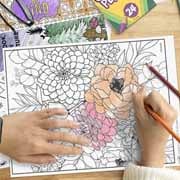
  2. 2. On construction paper, draw an outline of your neighborhood or town with Crayola Erasable Colored Pencils. Or make up a town of your own. If you can, draw the map to scale with a ruler. Label street names and major landmarks.
  3. 3. Use symbols and colors to identify places, such as green areas for parks and blue for rivers, and an airplane for the airport.
  4. 4. Draw a key to show symbols, compass directions, and the scale of distances between points. For even more challenge, draw a grid over the area and label sections with letters and numbers.
  5. 5. Color in your map with Crayola Crayons.
  6. 6. Test your map-reading skills with friends and family by asking each other to find places in your town on the map. Or make a game by counting how many hospitals you located, finding the distance between two places, or predicting where new schools are likely to be built.

When & Where

"Making a Key to the City helped us find our way around when we moved to our area. Now we do it as a welcome for new members."
- Ray C., scout leader.

"My Career Day demonstration was a hit at my kids' school thanks to Key to the City."
- Patrice M., civil engineer and mother of two kids ages 8 and 11.

Interesting Info

A Babylonian clay tablet map found in 1930 in what is now Iraq is thought to be the earliest known map. It dates back to 6,200 BCE.

© 2000 - 2006 Binney & Smith, Inc.