Fairy Folktale Diorama

crayola supplies

household supplies

Why?

Tell fairy tales and folktales again and again with these dioramas. Even tall tales seem almost real with these miniature settings and characters!

Steps

  1. 1. Read folk and fairy tales in picture books. Try to find stories from several cultures and times. Look closely at pictures and listen to the words to find out all about the setting. Talk with classmates about the characters, their appearances, and the way they talk and act.
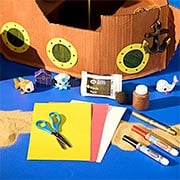
  2. 2. Build dioramas with recycled items to retell a story's setting and characters. Here's one way to create a diorama in a recycled box. Use your own imagination to build yours.
  3. 3. Use Crayola® Scissors to cut paper to fit in the back of the box.
  4. 4. Cover your art area with newspaper. Make a wet watercolor backdrop by brushing clear water over paper with a Crayola Watercolor Brush. Brush Crayola Washable Watercolors on the wet paper. Swirl and blend colors in your wash. Air dry flat.
  5. 5. Spread Crayola School Glue on the back of your diorama box. Attach the watercolor backdrop.
  6. 6. Shape miniature story characters from Crayola Model Magic. Create your own colors by kneading color from Crayola Washable Markers into white Model Magic. Sculpt each character to show personalities.
  7. 7. Use craft items to decorate your characters. For example, embed feathers for wings and beads for buttons in your damp figures. Add fairy sparkles with Crayola® Glitter Glue. Air dry at least overnight.
  8. 8. Combine Model Magic with chenille stems, plastic bottle caps, and small boxes to make furniture, buildings or other objects in your story's setting. Air dry overnight.
  9. 9. Arrange everything in the box. Glue in place if you want the display to be permanent. Cover the box opening with cellophane if you wish. Glue in place. Air dry.
  10. 10. Use Fairy Folktale Dioramas to retell your original story. Or make up your own new tales. Add your own plot twists and turns to familiar stories. Share your stories with classmates.

adaptations

Record original stories as they are told. Volunteers transcribe stories, putting several sentences on each page. Illustrate each page, then staple or bind into class books to share.

Younger children who are not yet reading independently listen to fairy and folk tales read aloud. Use retellings and dioramas as opportunities to assess listening comprehension and understanding of setting, character, and plot.

Build sets, sew costumes, write a script, and put on a play that tells the story you read.

benefits

Children read (or are read) fairy tales and folk tales from various cultural traditions.

Students identify settings, plots, and characters in their favorite stories.

Children build dioramas of story settings and characters, then retell the story or create their own new plots.

grades

Grades 1 to 3
Grades 4 to 6

subjects

Language Arts
Visual Arts

time

Less than 1/2 hour
30 to 60 minutes

curriculum standards links

US: Research U.S. Standards
UK: Research UK Standards
Canada: Research Canada Standards

safety guidelines

Crayola Modeling Materials including Crayola Model Magic®, and Model Magic Fusion™, Crayola Air-Dry Clay, and Crayola Dough—

Crayola Washable Paints—Not for use as body/face paint.

Scissors—ATTENTION: The cutting edges of scissors are sharp and care should be taken whenever cutting or handling. Blunt-tip scissors should be used only by children 4 years and older. Pointed-tip scissors should be used only by children 6 years and older.

© 2000 - 2007 Crayola, LLC