
Parts of Speech Staircase

crayola supplies

household supplies

Why?

What’s the difference between a noun, verb, adverb, and adjective? Step up to this study tool to help you remember!

Steps

  1. 1. With Crayola® Anti-Dust Chalk, create an attributes chart to show the parts of speech your class is studying. For example, label four rows noun, verb, adverb, adjective. Label two columns what it is and examples. Work together as a class to define each part of speech and generate some word examples.
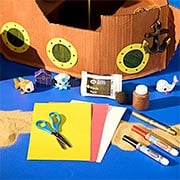
  2. 2. Make your own Parts of Speech Staircase by folding the top of one sheet of construction paper over about 1/4 of the way. Crease. Fold a second sheet so the top edge reaches down about 5/6 of the way. Crease. Place the second sheet inside the first. Glue along the folds with a Crayola Glue Stick.
  3. 3. Use Crayola Fine Line Markers to write the name of one part of speech on each flap in large letters. Write some word examples around each part of speech.
  4. 4. On the back of each flap write the definition and draw a picture to remind yourself of what that part of speech does. For example, draw some people, places, and things on the back of the noun flap. Draw figures in action on the back of the verb flap. Write descriptive words with pictures that demonstrate the traits on the backs of the adjective and adverb flaps.

adaptations

Look for words with colorful and interesting fonts in recycled magazines or make your own on the computer. Use Crayola Scissors to cut out nouns, verbs, adverbs, and adjectives. Glue to flaps of staircase.

Students with special needs or younger children may find it helpful to make one staircase for each part of speech. On the top flap write noun, on the second flap write what it is, on the third flap write examples, and on the bottom write sentences. Lift the top flap and write the definition of a noun above the label what it is. Add examples and sentences on the other two flaps. Use markers to add small pictures to illustrate your examples and sentences. Make separate staircases for verbs, adverbs, and adjectives.

benefits

Children grow in their understanding of the attributes of a noun, verb, adverb, and adjective, or other parts of speech.

Students produce a study tool using words and pictures to help them learn and remember the differences between parts of speech.

grades

Grades 1 to 3
Grades 4 to 6
Special Needs

subjects

Language Arts
Visual Arts

time

Less than 1/2 hour
30 to 60 minutes

curriculum standards links

US: Research U.S. Standards
UK: Research UK Standards
Canada: Research Canada Standards

© 2000 - 2007 Crayola, LLC