Our Voices Count
Champion a worthy cause and be silent no more. Design distinctive letterhead on which to share information and call leaders to action.
1. Many worthy issues at the local, national, and global levels need support. Where do you want to put your time and energy? Perhaps your passion is to conserve energy, preserve historic sites, get a candidate elected, or save endangered species.
2. Maybe you know someone personally affected by an issue, such as diabetes. Although there is no cure yet, there are many things that can be done, especially by the 41 million people (many of them younger than 18) who have pre-diabetes. Diabetes is a disease in which the body does not produce or properly use insulin, a hormone needed to convert sugar, starches, and other food into energy. Whatever issue you choose, the more people who know about it, the more likely they will help make improvements.
3. After you have centered on a topic, learn all that you can about it. As your expertise grows, work with others to come up with a plan to promote your cause. A letter-writing campaign is just one possibility.
4. Determine to whom you want to write a personal letter, such as local and national politicians, newspaper editors, or civic and school leaders. Many organizations have sample letters and contact information for decision makers on their Websites. Remember, always write from your heart.
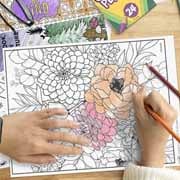
5. To convey your message in a personal way, design a striking letterhead using Crayola Erasable Colored Pencils. Start with a colorful border such as the one shown in the sample, which is about diabetes. Pick an action word or slogan, perhaps to encourage people to be aware of the amount of sugar that they consume. How would you state your point visually, maybe an array of candy colors? Make matching envelopes that stand out as well.
6. Share your passion with other students before mailing your letter.
Adult supervision is required for any arts & crafts project. Observe children closely and intervene as necessary to prevent potential safety problems and ensure appropriate use of arts and crafts materials. Some craft items, particularly beads and buttons, are potential choking hazards for young children. Avoid use of such small parts with children younger than 3 years. Craft items such as scissors, push pins and chenille sticks may have sharp points or edges. Avoid use of materials with sharp points by children younger than 4 years. Read all manufacturers' safety warnings before using arts and craft supplies.
- November is Diabetes Awareness Month. Plan some consciousness-raising activities for your school or community. Bring in a speaker. Present a panel of people with diabetes, possibility some students. Host a fundraiser dance or fitness day.
- Install a bulletin board at your school for different action groups to post their activities and issues.
- Speak with family members about the issues when they were in school. What kinds of actions did they take? How did they feel about their ability to make a difference?
- Assessment: Students choose an issue and gain knowledge of pertinent points. Students write and decorate a convincing letter to send to a decision maker.