
Man of the Century

Man of the Century lesson plan

What's behind Albert Einstein's frizzy hair, wiry mustache, and penetrating eyes? Find out and create a bas-relief mask of this unforgettable face.

  • 1.

    Quickly gather general information about Albert Einstein using electronic and text resources. Share these well-known facts about this well-known man, including his famed ability to think about the world in a different way. Write a short paragraph with Crayola® Metallic Colored Pencils giving an overview of Einstein's life and work.

  • 2.

    Begin a new paragraph with "But did you know...?". Put your writing aside for a bit to dig deeper into your resources for some less familiar facts about Einstein. What were his ideas on the meaning of life, the perfect government, and the value of imagination? Collect interesting quotes. Find out about his childhood and family life. Organize your information into a series of related sentences and then paragraphs to complete your report on Einstein.

  • 3.

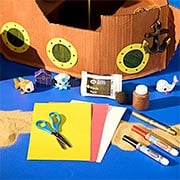
    Refer to a photograph of Einstein. Use art materials in a new way to create an honorary bas-relief mask of his face. Cover your work area with newspaper. Wet construction paper with a solution of equal parts Crayola School Glue and water to build up Einstein's face on cardboard. Roll paper into a ball and place under a second piece of construction paper for a nose.

  • 4.

    Think of inventive ways to make eyes and mouth. Glue on twine hair, eyebrows, and a mustache. Dry.

  • 5.

    Paint with Crayola Washable Watercolor Paints and Watercolor Brushes. Dry.

  • 6.

    Add excitement to the mask with Crayola Oil Pastels. Be imaginative in your use of bright colors on and around the mask.

Standards

  • LA: Integrate information from several texts on the same topic in order to write or speak about the subject knowledgeably.
  • LA: Read and comprehend informational texts, including history/social studies, science, and technical texts, at the high end of grade level text's complexity band independently and proficiently.
  • LA: Conduct short research projects that use several sources to build knowledge through investigation of different aspects of a topic.
  • LA: Recall relevant information from experiences or gather relevant information from print and digital sources; summarize or paraphrase information in notes and finished work, and provide a list of sources.
  • LA: Engage effectively in a range of collaborative discussions (one-on-one, in groups, and teacher-led) with diverse partners on grade level topics and texts, building on others’ ideas and expressing their own clearly.
  • LA: Report on a topic or text, tell a story, or recount an experience with appropriate facts and relevant, descriptive details, speaking clearly at an understandable pace.
  • VA: Intentionally take advantage of the qualities and characteristics of art media, techniques, and processes to enhance communication of experiences and ideas.
  • VA: Select and use the qualities of structures and functions of art to improve communication of ideas.

Adaptations

  • Possible classroom resources include: Albert Einstein and Relativity for Kids: His Life and Ideas with 21 Activities and Thought Experiments by Jerome Pohlen; Ordinary Genius: The Story of Albert Einstein by Stephanie Sammartino McPherson; Dare To Dream!: 25 Extraordinary Lives by Sandra McLeod Humphrey
  • What is dyslexia? Albert Einstein is said to have been dyslexic. How did this affect his early life? How did Einstein learn to overcome dyslexia?
  • What was the Manhattan Project? What connection does Albert Einstein have to this work? Once the work was complete, have did Einstein feel about what had been developed? Students research is organized into an electronic format for presentation to classmates.
  • Albert Einstein's birthday was on March 14th. That is the day that Pi Day is now celebrated. What is the connection between Pi Day and Einstein?
  • Students investigate famous quotes that are credited to Albert Einstein. Examine these and attempt to explain Einstein's meaning behind the quotes.