Every Vote Counts
Student pollsters gather, summarize, display, and analyze their opinion poll results. What more could you ask?
1. Kids' opinions count! Find out your schoolmates' choices in a weekly opinion poll. Feature results on a bulletin board that you design, build, and manage. Some topics you might survey: tastiest school lunch item, school uniforms, favorite way to exercise. Each week, choose one question and the group you will ask. Here are a few suggestions to get your survey team started.
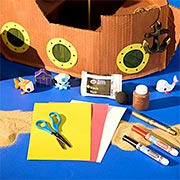
2. Set up the bulletin board. With Crayola® Scissors, cut craft paper to cover a bulletin board. Create four signs: your display title, "What we asked," "Who we asked," and "Results" with Crayola Gel Markers. Attach signs at the top of the bulletin board with a Crayola Glue Stick.
3. Leave the bottom left side of the bulletin board blank to list poll choices. Attach long pieces of hook and loop tape the rest of the way across. Attach small pieces of tape to several clean recycled plastic containers so they can be used as symbols to represent votes for each choice.
4. Take your poll. Gather information for your first poll in a notebook. Write the poll question and choices with Crayola Erasable Colored Pencils. Visit classrooms, lunch tables, or groups of children at recess to ask your question. Tally each vote.
5. Show your results. Make signs with the poll question and the name of the group(s) you polled. Attach to the top of the board.
6. Add your tally marks and construct a graph to show the data. Write labels on paper strips and attach to the left of each tape strip. Decide how many votes each snack cup represents. Attach snack cups on the tape strip. Analyze the poll findings. Were you surprised by anything? Who might find your data especially useful?
Adult supervision is required for any arts & crafts project. Observe children closely and intervene as necessary to prevent potential safety problems and ensure appropriate use of arts and crafts materials. Some craft items, particularly beads and buttons, are potential choking hazards for young children. Avoid use of such small parts with children younger than 3 years. Craft items such as scissors, push pins and chenille sticks may have sharp points or edges. Avoid use of materials with sharp points by children younger than 4 years. Read all manufacturers' safety warnings before using arts and craft supplies.
Recycled Containers—Must be clean and safe. Do not use containers that contained bleach or other harmful chemicals (for example, household cleaners, dishwasher or laundry detergents). Do not use recycled metal cans that have sharp edges (for example, lids removed by household can openers).
Scissors—ATTENTION: The cutting edges of scissors are sharp and care should be taken whenever cutting or handling. Blunt-tip scissors should be used only by children 4 years and older. Pointed-tip scissors should be used only by children 6 years and older.
- Work in four teams, each in charge of one poll per month. Divide responsibilities, schedule polling and bulletin board design, and disseminate results.
- Find, gather, and create a collage of charts, tables, and graphs found in newspapers and magazines. Compare different ways to visually represent numerical information.