Field Trip to the Fire Station

Why

Collect, organize, and graph data after a visit to a fire station.


Steps

1. Read a fire safety book or watch a video. Find out about fire safety celebrations such as May 4, International Firefighters' Day, which firefighter Julie-Jane Edmondson from Clyde, Victoria, Australia, started. Assist your teacher in planning for a visit to the fire station.


2. What do you think you might see at a fire station? Identify important firefighting equipment to graph. Write the name of each item on an index card with Crayola® Markers.


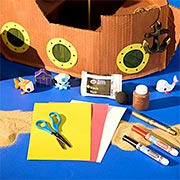
3. Draw small fire trucks, ambulances, ladders, or other equipment using Crayola Construction Paper Crayons, Crayola Scissors, and index cards or construction paper.


4. Post index card graph labels in a column on a bulletin board or large piece of poster board. Predict how many of each item you will see at the fire station. Attach equipment pictures behind each label with clear adhesive tape to represent your predictions.


5. Visit the fire station. Count the pieces of equipment you see. Talk with firefighters about their work. Who else works at the fire station? Collect data for the graph on paper with Crayola Colored Pencils. Sketch equipment to help you remember details.


6. After your visit, compare your data with your predictions. Review what you learned about the equipment and the job of fire rescue teams. Draw more detailed picture labels with crayons to replace the written graph labels. Include specific things you remember about the equipment you saw.


7. On a large piece of construction paper, assemble the graph to reflect the data you collected about the firefighting equipment. Attach labels and equipment with Crayola Glue Sticks. Design a title for the graph and add it at the top.


Safety Guidelines

Adult supervision is required for any arts & crafts project. Observe children closely and intervene as necessary to prevent potential safety problems and ensure appropriate use of arts and crafts materials. Some craft items, particularly beads and buttons, are potential choking hazards for young children. Avoid use of such small parts with children younger than 3 years. Craft items such as scissors, push pins and chenille sticks may have sharp points or edges. Avoid use of materials with sharp points by children younger than 4 years. Read all manufacturers' safety warnings before using arts and craft supplies.

Scissors—ATTENTION: The cutting edges of scissors are sharp and care should be taken whenever cutting or handling. Blunt-tip scissors should be used only by children 4 years and older. Pointed-tip scissors should be used only by children 6 years and older.

Adaptations

  • To collect data at the fire station, small teams of children can count one item each so all items will be counted. Students bring a clipboard to record their data. Note other equipment items not included in the original chart, and gather data on quantities.
  • Children make individual pictographs using Crayola MiniStampers and Fine Line Markers. Write or draw labels in a column down the left side of the paper, stamping the quantities to the left of each label. Equally space stamps so the graph truly reflects quantities. Use individual graphs as informal assessment of understanding of parts of a pictograph.
  • Younger children create a fire station or fire truck with a recycled appliance box. Include details of the equipment by using paint, markers, and craft materials, using sketches from the fire station visit as a reference. Practice fire safety skills such as Stop, Drop, and Roll.

Related Lesson Plans

Lesson Plans

Share on Facebook

Supplies

crayola supplies
  • Construction Paper™ Crayons
  • Colored Pencils
  • Markers
  • Glue Sticks
  • Blunt-Tip Scissors
  • Construction Paper
household supplies
  • index cards
  • oak tag or poster board
  • clear adhesive tape

Overview

grades

  • Pre-K and Kindergarten
  • Grades 1 to 3

subjects

  • Math
  • Social Studies
  • Visual Arts

time

  • Multiple Sessions

benefits

  • Children assist in planning for a field trip by helping to arrange schedules, find transportation or a route to walk, recruit adult chaperones, obtain signed permissions, and decide upon guidelines for their visit.

  • Students engage in and respond to a visit to the fire station by collecting, organizing, and graphing data.

  • Students design a large pictograph of the equipment observed at the fire station.

Cirriculum

Research Canada Standards
Research UK Standards
Research U.S. Standards