Insect Symmetry
Explore symmetry in nature. Investigate the insect world, then create colorful butterflies, dragonflies, damselflies, and other symmetrical creatures.
1. Use library and electronic resources to investigate the insect world. Pay special attention to designs on wings. Identify the body parts of insects (head, thorax, abdomen, legs, wings, antennae). Compare and contrast insect groups (such as butterflies, beetles, dragonflies, and ants).
2. Design your own symmetrical insects. Fold paper in half. Use a black Crayola® Washable Marker to draw half of the insect. Be sure the center of the insect body meets the fold. Add detailed wing and body designs in your outline.
3. Turn over the folded paper. Trace the image you see through the paper. You may need to hold your folded paper against a sunny window or a light table so the image on the other half is easy to see.
4. Open the paper. Add color to the outlined design with Crayola Crayons. As each area is colored, fill in the same area in the same color on the other half to make the insect symmetrical. Color all areas with crayon, including the background. Rub your entire drawing with a paper towel to give it a glossy sheen.
Adult supervision is required for any arts & crafts project. Observe children closely and intervene as necessary to prevent potential safety problems and ensure appropriate use of arts and crafts materials. Some craft items, particularly beads and buttons, are potential choking hazards for young children. Avoid use of such small parts with children younger than 3 years. Craft items such as scissors, push pins and chenille sticks may have sharp points or edges. Avoid use of materials with sharp points by children younger than 4 years. Read all manufacturers' safety warnings before using arts and craft supplies.
- Discuss drawings with students to informally assess understanding of symmetry and identification of insect body parts. Ask students to label insect body parts.
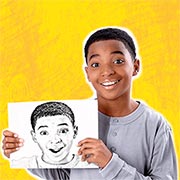
- Use Crayola Scissors to cut out insects. Glue string to tips of wings and hang. Display with symmetrical portraits of faces, flowers, and trees drawn using the same techniques.
- Create a field of wildflowers or other natural habitats in which the insects fly. Draw flowers on roll paper. Display insects in their habitat.