Pop Up Smiling!
Create pop-up books to remind yourself and others to take good care of that smile.
1. Find out about the latest recommendations to keep teeth and gums healthy. Contact the American Dental Association. Invite a dentist or dental hygienist to speak to your class during Children's Dental Health Month in February. Search for on-line resources, brochures, and magazine articles.
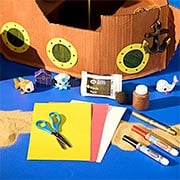
2. Plan a pop-up book about oral health. On white paper, use Crayola® Markers to list tips and recommendations to include on each page. Figure out how to illustrate each idea with pop-up figures.
3. For each page of your book, fold construction paper in half so the shorter sides meet. Make two cuts with Crayola Scissors into the fold for each pop-up tab. Each cut should go in from the fold one or two inches (2-5 cm). Fold tabs away from fold edge and then open paper and pull tabs through to the open side.
4. Draw pop-up figures with markers on construction paper. Cut out each figure. Put Crayola School Glue on each tab and press on figures. Dry.
5. Add written text to each page in colorful marker lettering.
6. Arrange pop-up pages in order. Glue the back sides together.
7. Fold construction paper around the glued pages and glue to make the front and back cover of your book. Add a title and design the cover with markers.
Adult supervision is required for any arts & crafts project. Observe children closely and intervene as necessary to prevent potential safety problems and ensure appropriate use of arts and crafts materials. Some craft items, particularly beads and buttons, are potential choking hazards for young children. Avoid use of such small parts with children younger than 3 years. Craft items such as scissors, push pins and chenille sticks may have sharp points or edges. Avoid use of materials with sharp points by children younger than 4 years. Read all manufacturers' safety warnings before using arts and craft supplies.
Scissors—ATTENTION: The cutting edges of scissors are sharp and care should be taken whenever cutting or handling. Blunt-tip scissors should be used only by children 4 years and older. Pointed-tip scissors should be used only by children 6 years and older.
- Share pop-up books with other classes. More skilled book authors partner with younger or developmentally challenged children for a read-around time.
- Older children work with younger children to create reminders. Children number and decorate blank calendar pages. Younger children put smiles on each day that they take care of their teeth.
- Sponsor a classroom dental health poster contest. Students develop criteria for judging posters. Brainstorm important things that should be included on posters. Display posters in hallways as dental health reminders.