Skip to Main Content

Lesson Plans

Spark creativity with Crayola lesson plans. With hundreds of activities, the learning possibilities are endless. 

Animal Groups

Animals, Animal Groups, Fish, School of Fish, Herd, V-Formation, Geese, Wildebeest, Sponge Painting, Collective Behavior, Travel in Groups

Lesson Plan

Supplies Needed

Gather all the supplies needed to bring your craft ideas to life! From paints and markers to glue and scissors, our crafts section has everything to spark creativity and make every project truly special.

Steps

  • Step 1

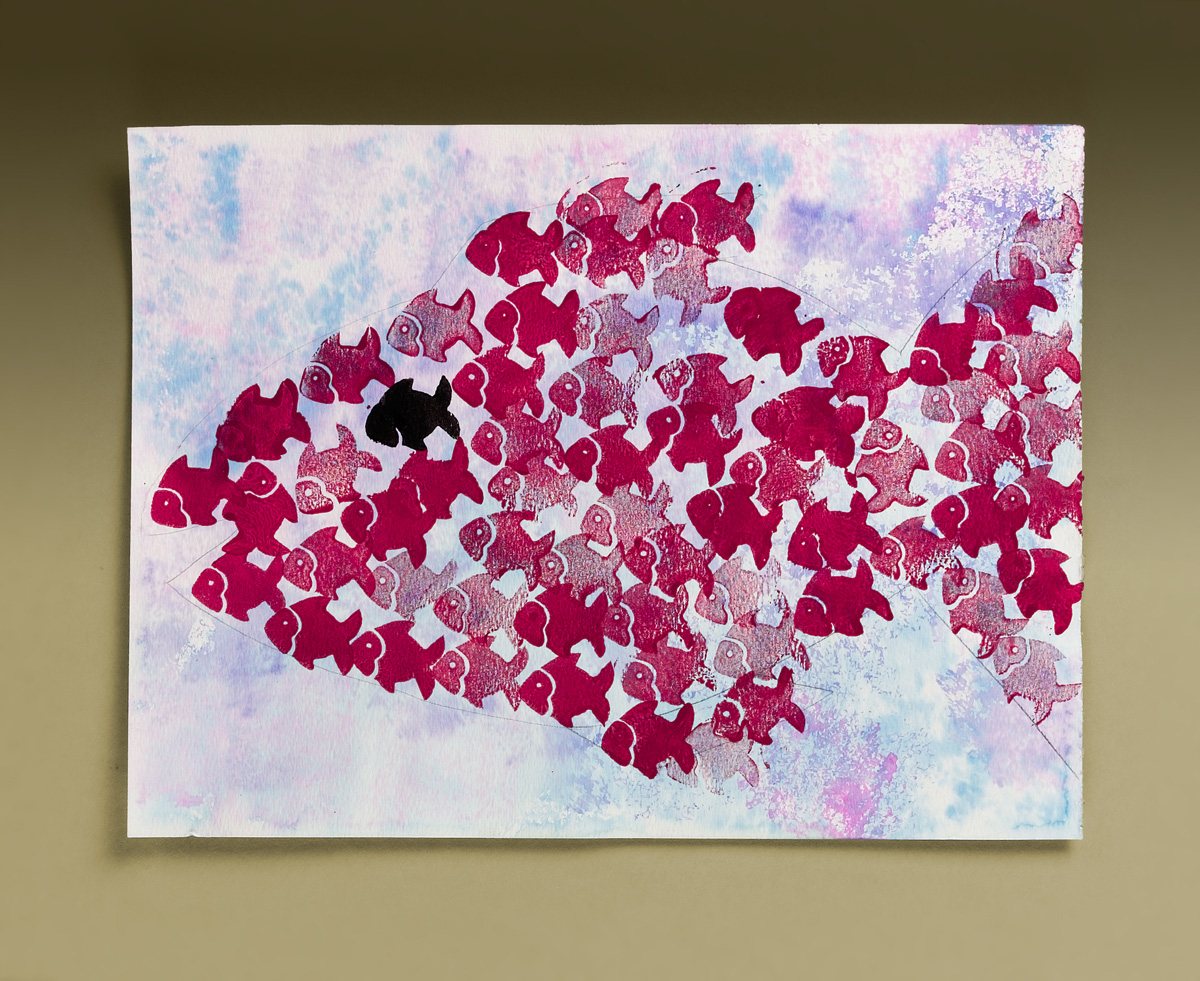
    Have students identify how groups of various animals travel together. For example, geese fly in a V formation in order to reduce the wind resistance, thus conserving energy. And fish travel in schools to protect them from enemie, and it also helps them swim more efficiently. Ask students to investigate other animals that travel in packs or herds. Then ask them to choose one type to depict in a sponge painting.

  • Step 2

    Have students sponge paint a piece of paper to create a background. Encourage them to choose background colors that reflect the natural habitat of their chosen animal. They can depict their animals in bold, unexpected colors for contrast.

  • Step 3

    To make the background students can dip a sponge in several different colors of paint that have been diluted with water, and then gently press the sponge in damp paint so the colors blend and move across the page. When this dries ask students to lightly draw a large outline of the animal with a colored pencil.

  • Step 4

    Help students cut the shape of their animal out of a small sponge. Then ask them to dip the small animal sponge into undiluted paint and press it onto the paper within the boundaries of the animal outline they drew.

  • Step 5

    Have students present their sponge paintings and talk about some of the facts they learned about the animal they portrayed.

Standards

SCI: Construct an argument that plants and animals have internal and external structures that function to support survival, growth, behavior, and reproduction.

SCI: Convey designs through sketches, detailed drawings, or physical models to communicate ideas and solutions.

Adaptations

Meerkats are small animals that live in groups (called "mobs") within rock crevices or burrows, but they must leave the safety of these homes to find food. Some will forage while several others stand guard. Have students learn about this cute South African variety of mongoose. How are the guards "elected"? How do they communicate with each other? What do they eat?

Honeybees are social insects who live in well-organized groups called colonies. Have students learn about how these colonies function. What subgroups are there? What is the hierarchy? What tasks are performed by each group?