Skip to Main Content

Lesson Plans

Spark creativity with Crayola lesson plans. With hundreds of activities, the learning possibilities are endless. 

Chunnel Cross-Section

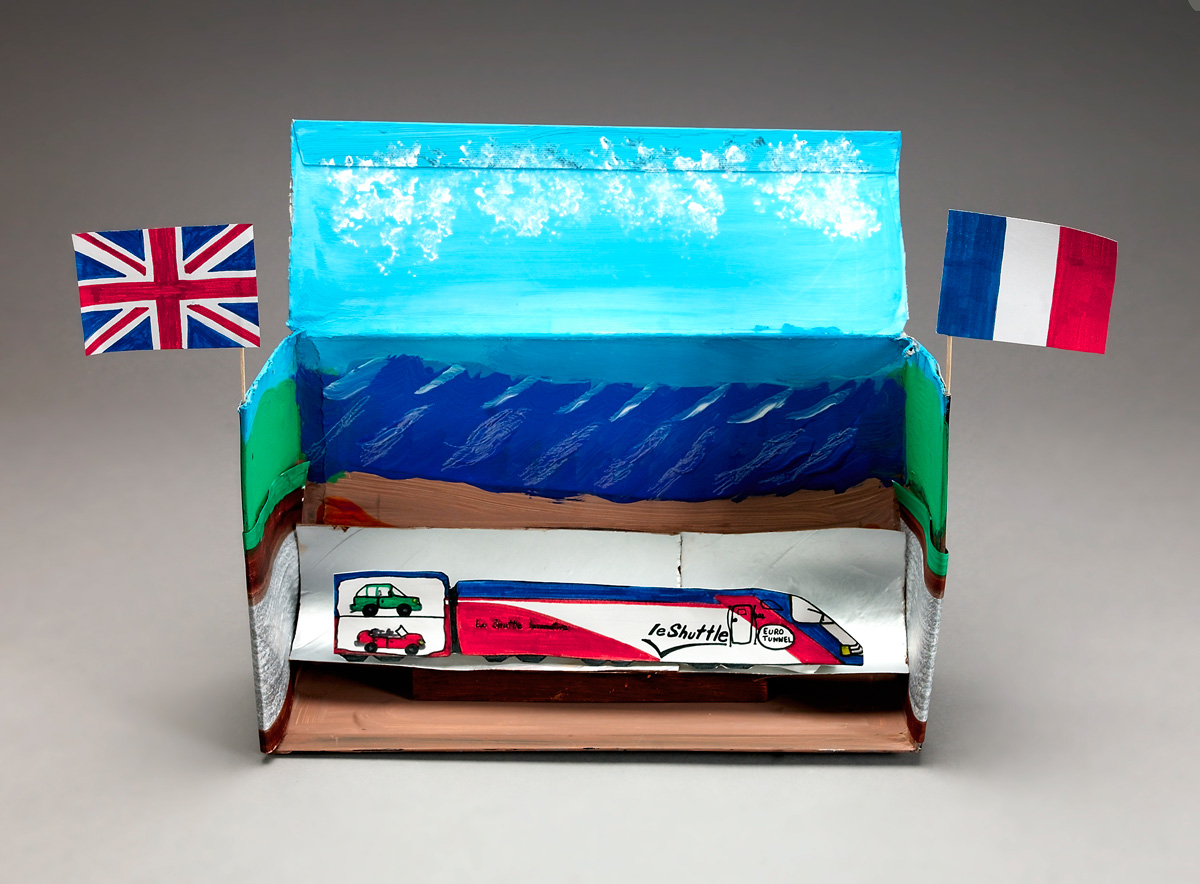
Dig in and explore the expansive high-speed method of transportation England and France through a tunnel under the English Channel, then create a replica of this "Chunnel."

Lesson Plan

Supplies Needed

Gather all the supplies needed to bring your craft ideas to life! From paints and markers to glue and scissors, our crafts section has everything to spark creativity and make every project truly special.

  • Recycled Cardboard Box
  • Recycled Cardboard Tube
  • Toothpick(s)

Steps

  • Step 1

    Have students learn about the Channel Tunnel (known as the Chunnel), a railway tunnel 246 feet below the sea bed of the English Channel that connects Folkestone, Kent in the United Kingdom with Calais, France. Have them investigate its history (it was actually first discussed in 1802!), how it was constructed, who the first person was to cross it, how long the trip takes, and what item the British tunnelers passed to their French counterparts at the completion (hint: it was soft and cuddly).

  • Step 2

    Have students create a diorama of the Chunnel. Ask them to find images, including cross sections, of the Chunnel to use as a guide. They can paint the inside back and sides of a recycled shoe box to create the setting. A paper towel tube cut in half can serve as the tunnel, and they can create the high-speed train out of paper and glue it inside the tunnel. They can also embellish the diorama with representative symbols, such as the national flags of the United Kingdom and France.

  • Step 3

    Display the dioramas and encourage a discussion of what it must be like to travel through the chunnel. What are the benefits to individuals and to the economy in each country?

Standards

SS: Science, Technology, and Society: Identify how technologies such as communication and transportation have evolved and how people have employed advances in technology to modify daily lives including in health and economics. Explore historical examples and imagine future technologies.

SS: Global Connections: Become aware of how things that happen in one part of the world impact other parts of the world and the global connections within basic issues and concerns.

Adaptations

Why a tunnel and not a bridge? Have students explore the pros and cons of each of these modes of transportation that span bodies of water. For example, tunnels have virtually unlimited weight-carrying capacity and are protected from adverse weather effects, but their construction requires advanced and specialized equipment and can take much longer build than a bridge.

Have students research how coal is mined. How are coal mine tunnels ventilated? How is the coal extracted and transported? How have the processes evolved over time? What is a colliery?