Skip to Main Content

Lesson Plans

Spark creativity with Crayola lesson plans. With hundreds of activities, the learning possibilities are endless. 

Illustrative Investigators

Students are investigators who apply the five W's (who, what, where, when, and why) to a story.

Lesson Plan

Supplies Needed

Gather all the supplies needed to bring your craft ideas to life! From paints and markers to glue and scissors, our crafts section has everything to spark creativity and make every project truly special.

Steps

  • Step 1

    Talk about how journalists and investigators use the five W's - who, what, where, when, and why - (and often add how) to guide them when collecting information for a story. Explain that these question words can help people learn essential information and understand context, background, and motive. Discuss how this information helps them avoid the impulse to jump to conclusions. Have students think of a familiar story to apply these questions to. For example, Why did Little Red Riding Hood go into the woods? Who stopped her along they way? Where was her grandmother? How did the wolf trick her? Ask them to come up with questions that pertain to the story they chose. Or have them read a detective story, such as one found in the "Wilder the Detective" series by Seneca K. Bailey.

  • Step 2

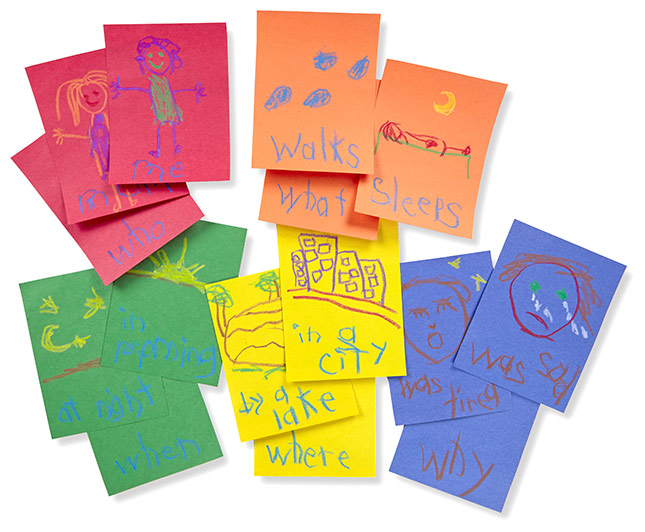
    Divide students into small groups, preferably with six in each group so each can represent one of the question words. Have them decide on a story to analyze. Ask each student to pick one of the question words to answer and illustrate. For example, the "who" person could draw the big bad wolf. The class can color code the paper so that all the "who" drawings are one color, the "what" drawings are another, etc.

  • Step 3

    When the drawings are done, have the groups present their stories and artwork, with each student taking a turn in the storytelling.

Standards

LA: Analyze how and why individuals, events, or ideas develop and interact over the course of a story.

LA: Ask and answer such questions as who, what, where, when, why, and how to demonstrate understanding of key communication strategies and information.

LA: Cite specific evidence when writing or speaking to support conclusions drawn from the illustrations and text.

Adaptations

Have students write and illustrate an original mystery story.

Have students break into pairs and take turns interviewing each other. The interviewee can pretend to be a someone they admire or a fictitious character.