
Skip to Main Content

Lesson Plans

Spark creativity with Crayola lesson plans. With hundreds of activities, the learning possibilities are endless. 

Life in the Ocean

What marine species live in the twilight zone? No, not the sci-fi one, but the twilight zone in the ocean. Students will investigate the five main ocean zones and depict some of the marine life there.

Lesson Plan

Supplies Needed

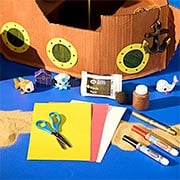
Gather all the supplies needed to bring your craft ideas to life! From paints and markers to glue and scissors, our crafts section has everything to spark creativity and make every project truly special.

Steps

  • Step 1

    Oceans cover the majority of the Earth's surface, about 70 percent, and contain about 97 percent of all the water on the planet. Have students investigate the five main zones: sunlight (euphotic), twilight (dysphotic), midnight (aphotic), the abyss (abyssal), and the trenches (hadal). At what depth does each begin? What is the temperature? How much light (if any) is there? What are some of the marine species that live in each zone?

  • Step 2

    Ask students to choose a zone to learn more about. Then have them create a diorama that depicts some of the marine life found there. They can illustrate an ocean background on construction paper, then glue or tape it into an open box. They can draw marine life images on heavy paper, cut them out, and attach them to the top of the diorama with string.

  • Step 3

    Ask students to present their dioramas and discuss the zone they depicted, some facts they learned about the zone, and some of the species that thrive there.

  • Step 5

Standards

SCI: Design pictorial or graphic representations/models that are useful in communicating ideas.

Adaptations

Have students learn about some of the plants that grow in ocean zones and discuss some interesting details. For example, there are two types: floating and rooted. And new studies show that the sea anemone, long believed to be 100 percent animal, is actually half-plant, half animal!

Invite a marine biologist to speak to the class about oceans, ocean life, and threats to this ecosystem. If there isn't one living locally, arrange to have a video conference with an expert in the field.