Skip to Main Content

Lesson Plans

Spark creativity with Crayola lesson plans. With hundreds of activities, the learning possibilities are endless. 

Locomotive Travel

How have trains improved travel and trade? Students will explore the history of locomotion and illustrate this mode of transportation.

Lesson Plan

Supplies Needed

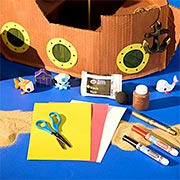
Gather all the supplies needed to bring your craft ideas to life! From paints and markers to glue and scissors, our crafts section has everything to spark creativity and make every project truly special.

Steps

  • Step 1

    The history of rail transport goes back quite far. There is evidence of constructed trackways dating to around 3800 BCE. There is also evidence of a paved trackway from 600 BCE used to transport boats pulled by wheeled vehicles in Greece. Have students research the evolution of this mode of transport, from wooden railways in 16th century Austria to the first steam-powered engines in the United Kingdom in the very early 19th century, to diesel and electric power used in modern times. Ask students to learn about how travel and trade have been impacted by trains. How did this mode improve the ease of transporting people and goods? How did trains revolutionize the economy and development of nations?

  • Step 2

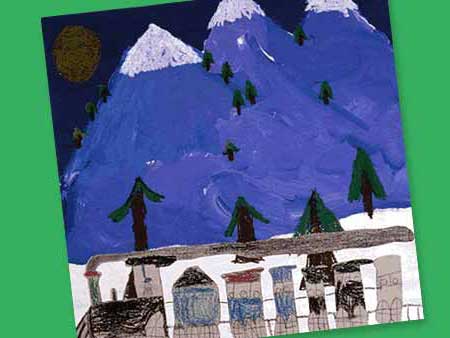
    Ask students to create a piece of art depicting train travel. It might be related to industry and the transportation of goods, or to commuting to work, or to travel and leisure. They can paint or draw or use a combination. They might also want to create a collage using cut-out images they've designed.

  • Step 3

    When their art is complete have them present it to the class and describe the type of train travel they depicted and how it has benefited people all over the world.

Standards

SCI: Time, Continuity, and Change: Read, reconstruct, and interpret the past. Imagine the future. Place oneself in various times and spaces and reflect on change. 

SCI: Science, Technology, and Society: Identify how technologies such as communication and transportation have evolved and how people have employed advances in technology to modify daily lives including health and economics. Explore historical examples and imagine future technologies. 

Adaptations

Have students investigate high-speed rail travel. What is the maximum speed at which these trains can travel? How does it benefit a population? Is it better for the environment? Can it boost a local economy?

Have students view some famous works of art related to trains and train stations and explore the artist's motivation for creating them. Suggestions include "La Gare Saint-Lazare" (1877) by Claude Monet, "Time Transfixed" (1938) by René Magritte, and "Autumn of Steam" (1979) by Terence Cuneo.