Skip to Main Content

Lesson Plans

Spark creativity with Crayola lesson plans. With hundreds of activities, the learning possibilities are endless. 

Lost Underwater Cities

Under layers of water lie the remains of great cities and civilizations. Students will investigate some of these and capture their glory in a piece of artwork.

Lesson Plan

Supplies Needed

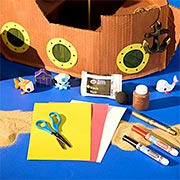
Gather all the supplies needed to bring your craft ideas to life! From paints and markers to glue and scissors, our crafts section has everything to spark creativity and make every project truly special.

Steps

  • Step 1

    In 360 BCE the Greek philosopher Plato imagined a city that existed long before his time, but was destroyed and submerged beneath the ocean. Though this is the stuff of legends, there are several real cities that have been discovered beneath the surface of our oceans and lakes. Have students explore the history of some of these cities such as Pavlopetri, Greece, which offers a unique glimpse into early urban planning; Thonis-Heracleion, Egypt, which as a gateway for goods entering Egypt; Atlit Yam off the coast of Israel, which is over 8,000 years old; the pre-Incan ruins in Lake Titicaca, Bolivia, or any others. What civilization dwelled there? What treasures are buried within it? What led to its downfall?

  • Step 2

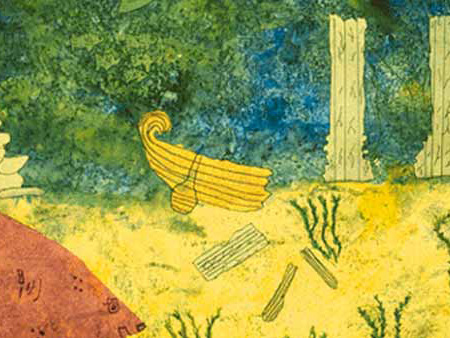
    Have students create a piece of artwork that shows some remains of this submerged city. They would outline the underwater objects with colored pencils and then create a watery effect by painting over the sketch with watercolors.

  • Step 3

    When their art is dry, have students present it to the class and discuss the location of the lost city and some of its notable characteristics.

Standards

SS: Time, Continuity, and Change: Analyze the causes and consequences of past events and developments, and place these in the context of the institutions, values and beliefs of the period in which they took place. 

SS: People, Places, and Environments: Use maps, globes, and other geographic tools. Demonstrate understanding of the use and misuse of the environment and the relationship between human populations and the physical world. 

Adaptations

Invite an archaeologist to speak to the class, either in person or via video, about what happens at an archaeological dig, how artifacts are preserved, and how dates are determined. Have students prepare questions in advance of the visit.

Have students learn about the Greek philosopher Plato (c. 428-423 BCE- c. 347 BCE) who is considered the most influential thinker in the history of Western thought.