Skip to Main Content

Lesson Plans

Spark creativity with Crayola lesson plans. With hundreds of activities, the learning possibilities are endless. 

My Monster is Hungry

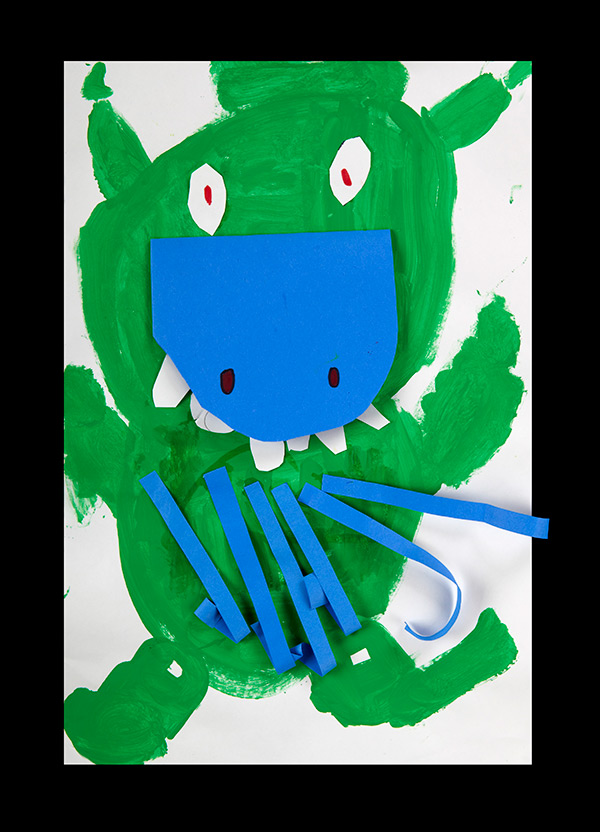
What does a monster eat? Children will learn about how a creatures have different kinds of teeth depending on their diet and then create a monster with paper cut-out teeth and other features that indicate whether it is a carnivore, herbivore, or omnivore.

Lesson Plan

Supplies Needed

Gather all the supplies needed to bring your craft ideas to life! From paints and markers to glue and scissors, our crafts section has everything to spark creativity and make every project truly special.

Steps

  • Step 1

    Ask children to think about their teeth. Why are some flat? Why are some pointy? Explain that our diet determines how our teeth evolve. Most humans are omnivores, which means they eat both meat and vegetables. Animals that eat only meat are called carnivores, and those that eat only plant material are called herbivores. Show images of some animals that fit into each category. Have children note that carnivores (such as lions, sharks, tigers, etc.) have teeth that are very pointy while herbivores (such as zebras, rabbits, elephants, etc.) have flatter teeth for grinding.

  • Step 2

    Have children design a hungry monster and think of the features it would need depending on what it likes to eat. Would it have pointy or flat teeth or both? Would it need a long neck to reach leaves in the trees? Ask them to paint it on paper and then cut or rip strips of paper to make the teeth and any other embellishing features they'd like to include. When the paint is dry they can glue the teeth and other features to the picture.

  • Step 3

    Have students present their hungry monster art to the class. Ask them to tell a story about the creature they designed. Where does it live and go to school? Who are its friends? What are some of the foods it enjoys most?

Standards

SCI: Use observations to describe patterns of what plants and animals (including humans) need to survive.

LA: Develop real and imagined narratives. 

Adaptations

Have students form small groups and have each group create a play featuring their hungry monsters.

Read a book such as "There are Monsters in My Bathtub" by Busy Hands Books or "How to Catch a Monster" by Adam Wallace and Andy Elkerton. Have a discussion about how we sometimes are afraid of unfamiliar things until we take the time to know and understand them.