Skip to Main Content

Lesson Plans

Spark creativity with Crayola lesson plans. With hundreds of activities, the learning possibilities are endless. 

Playing With Sets

Children will be all "set" for math lessons as they create artwork that explores the mathematical concept of sets.

Lesson Plan

Supplies Needed

Gather all the supplies needed to bring your craft ideas to life! From paints and markers to glue and scissors, our crafts section has everything to spark creativity and make every project truly special.

Steps

  • Step 1

    Introduce the concept of sets to students. You might arrange several objects (books, crayons, anything else) on a table and say that they are one set because they're all the same item (for example all books or all crayons) or you could group the same items into multiple sets by separating them by color (blue book covers with blue crayons and red covers with red crayons) or use any identifying feature to organize a number of sets. Tell children they will become "set detectives" when they create a game of separating object into different sets.

  • Step 2

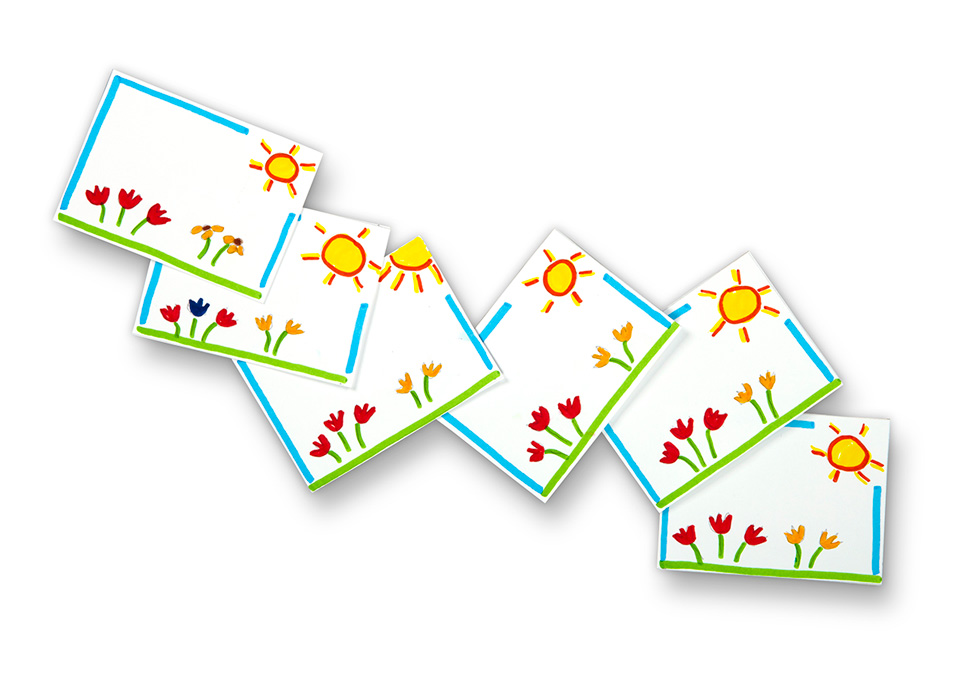
    Give each child four to six unlined index cards or small pieces of paper. Ask children to draw a simple picture of a group of objects, perhaps flowers. Then ask them to create similar drawings by varying some objects, shapes, lines, and colors on the other cards. 

  • Step 3

    Have children shuffle their cards and take turns playing the set detective game with classmates.  When they combine their stacks of cards they could make two sets based on the theme/objects they drew. Or they could form multiple sets based on the number of objects on the card or the number of colors used. For example, a set detective could match a card that has red, blue, and yellow flowers with a card that a classmate drew showing red, blue and yellow cars. They could make a set of cards that included a sun and a set of cards that did not include a sun. They can continue to work with other classmates and their cards to form more sets. 

Standards

MATH: Analyze, compare, create, and compose math ideas using written, oral, and drawn lines, shapes, forms, and patterns.  

MATH: Describe, compare, quantify, and classify objects by attributes. Sort objects into categories. 

Adaptations

Challenge students to create a drawing of sets on attributes they assume but can't measure. For example, one set could be objects that are heavy separated from objects that are lightweight. They assume an airplane is heavier than a bird. But do they all agree on whether that airplane is heavier or lighter than a truck?

Challenge students to create a drawing of sets on attributes they assume but can't measure. For example, one set could be objects that are heavy separated from objects that are lightweight. They assume an airplane is heavier than a bird. But do they all agree on whether that airplane is heavier or lighter than a truck?