Skip to Main Content

Lesson Plans

Spark creativity with Crayola lesson plans. With hundreds of activities, the learning possibilities are endless. 

Seuss-Inspired Sculpture

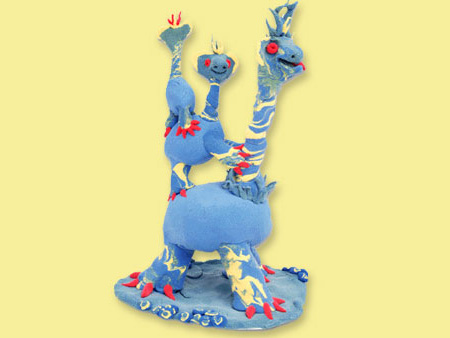
Dr. Seuss has captivated readers for decades. Students will learn about the author who has imparted meaningful messages while helping children learn to read, and then create a Seuss-inspired character out of Model Magic.

Lesson Plan

Supplies Needed

Gather all the supplies needed to bring your craft ideas to life! From paints and markers to glue and scissors, our crafts section has everything to spark creativity and make every project truly special.

  • Toothpick(s)

Steps

  • Step 1

    Theodor Seuss Geisel, better known as Dr. Seuss, was an American children's author and cartoonist. Ask students to name some of their favorite Dr. Seuss books. Did they know that "The Cat in the Hat" came about because of a study on illiteracy? The director of the education division at the Houghton Mifflin publishing company read that children were not learning to read because their books were "boring," so he asked Geisel to write a book using 250 of the words important for first graders to recognize. His books often present real-world lessons using fantastical characters in fictional lands. "The Lorax," for example, is a fable about environmental activism, "The Sneetches" is about tolerance and diversity, and "Horton Hatches the Egg" can be read as a tribute to adoption.

  • Step 2

    Have students write an original story featuring fantastical beings. It might be a story that shines a light on an important issue or a silly story that uses fun word play in the style of Dr. Seuss, or a combination.

  • Step 3

    Ask students to sculpt the character or characters described in their story using Model Magic. Point out that they can use an armature (a form that could be made from cardboard or crumpled paper or aluminum foil that they would apply Model Magic to) if desired. A toothpick or unfolded paper clip can be used as a modeling tool.

  • Step 4

    Have students present their stories and sculpted characters and discuss the theme they addressed.

Standards

LA: Add drawings or other visual displays to written text to clarify ideas, thoughts, and feelings. 

LA: Assess how a point of view or purpose shapes the content and style of written or oral communication.  

LA: Develop real and imagined narratives. 

Adaptations

Fantasy books often use imaginary settings to present real-world learning opportunities. Have students think of books or stories they've read that illustrate this concept. For example, the character of Hagrid in Harry Potter books embodies acceptance and tolerance, "Alice in Wonderland" guides us to embrace our identity, and "Strega Nona" (by Tomie dePaola) stresses the importance of listening and respecting boundaries.

Challenge students to make up new words in the style of Dr. Seuss. Perhaps "slooey" means slippery and gooey, and "preetzers" are beings who love to eat pretzels.