Skip to Main Content

Lesson Plans

Spark creativity with Crayola lesson plans. With hundreds of activities, the learning possibilities are endless. 

Terrific Tortoises

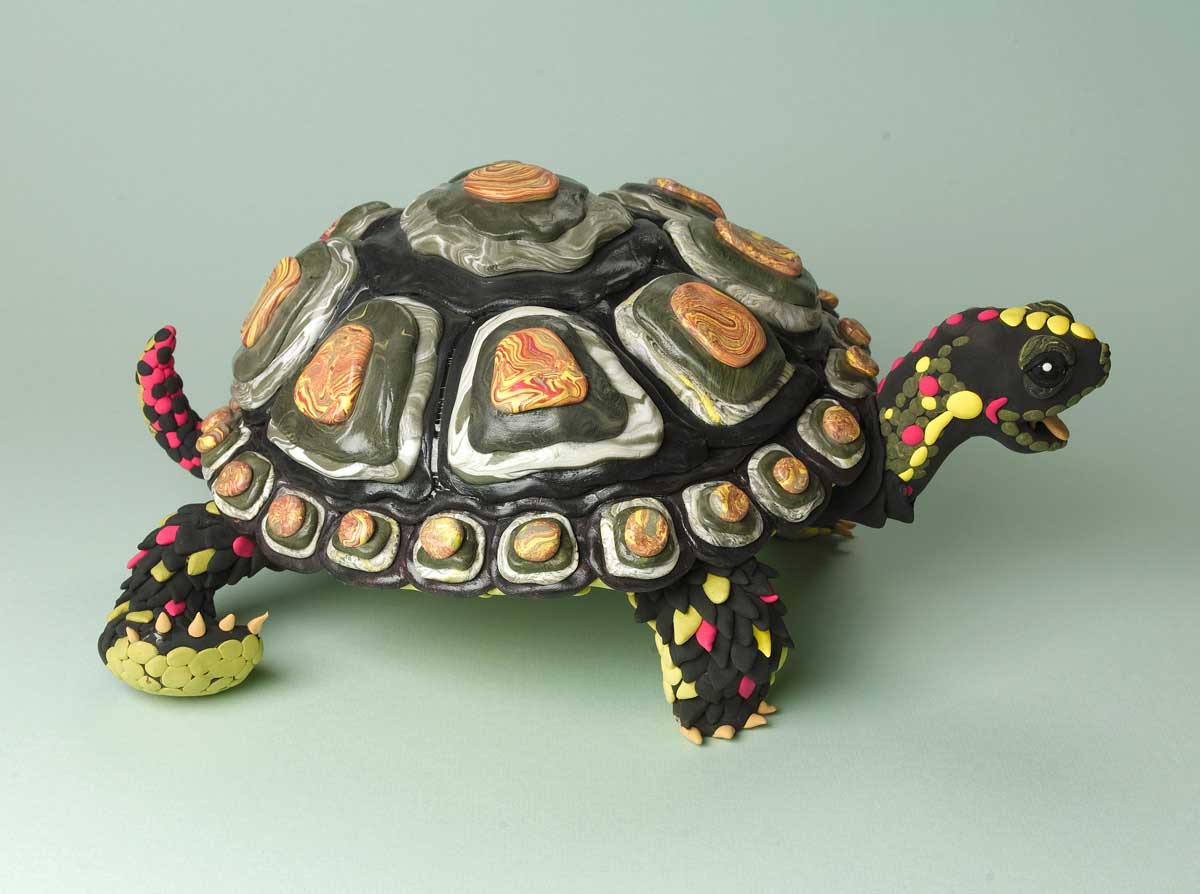
Tortoises are amazing creatures that have been on the planet for millions of years. Students will learn about this land animal and create a sculpture of one out of Model Magic.

Lesson Plan

Supplies Needed

Gather all the supplies needed to bring your craft ideas to life! From paints and markers to glue and scissors, our crafts section has everything to spark creativity and make every project truly special.

Steps

  • Step 1

    Tortoises are fascinating animals that have been on the planet for millions of years. Have students learn some facts about them. For example, they are the longest living land animals in the world, and the Galapagos tortoise, the largest of the species, often lives over 150 years. They are members of the turtle family but are exclusively terrestrial and do not have webbed feet as most other turtles that live in water much of the time do. Their shell is hard, but it is not an exoskeleton. Turtles are vertebrates and have endoskeletons. Have students learn about the anatomy of its shell. Ask them to define carapace, plastron, and scutes. Have them also investigate some of the ways the shell exemplifies biomimicry, the practice of mimicking strategies in nature to solve human challenges. 

  • Step 2

    Have students look at images of tortoises and note how they differ from other turtles. For example, the domed shape of a tortoise's shell offers better protection from predators, while turtles that live in water have a relatively flatter shell that helps them swim. Ask students to use these images to inspire them as they create a tortoise out of Model Magic. 

  • Step 3

    To begin they can create an armature base by crumpling newspaper on top of cardboard to form the body and shell of the tortoise. They will then cover the armature with a thin layer of Model Magic. They can create the scutes, the protective scaly shields, out of individual pieces of Model Magic which will stick to the Model Magic base if  both are still moist, or they can be glued together if the Model Magic is dry. Students can then complete the tortoise by sculpting legs, a neck, a head, and a tail. To give the shell a shiny look they can glaze it by mixing glue with water and using a paint brush to paint over the shell. 

  • Step 4

    When their work is dry, have students present it to the class and discuss some of the amazing facts they learned about tortoises.

Standards

SCI: Construct an argument that plants and animals have internal and external structures that function to support survival, growth, behavior, and reproduction.

SCI: Design pictorial or graphic representations/models that are useful in communicating ideas. 

Adaptations

A tortoise's shell offers an example of how a combination of shapes and materials can be used to build structures that would normally be vulnerable to breakage. Have students investigate other examples of biomimicry. For example, a Swiss engineer marvelled at how plant burrs stuck to his dog's fur during a walk. This led to the invention of Velcro.

Turtles are ectothermic, meaning cold-blooded, vertebrates so they have to rely on environmental heat sources to stay warm. Have students investigate other ectothermic vertebrates, such as amphibians (frogs, axolotls, etc.) and other reptiles (alligators, lizards, snakes, etc.) How do they survive in areas where temperatures fluctuate?