Skip to Main Content

Lesson Plans

Spark creativity with Crayola lesson plans. With hundreds of activities, the learning possibilities are endless. 

Variations on a Theme

Students will collaborate to create a game for younger children that emphasizes the power of descriptive language.

Lesson Plan

Supplies Needed

Gather all the supplies needed to bring your craft ideas to life! From paints and markers to glue and scissors, our crafts section has everything to spark creativity and make every project truly special.

Steps

  • Step 1

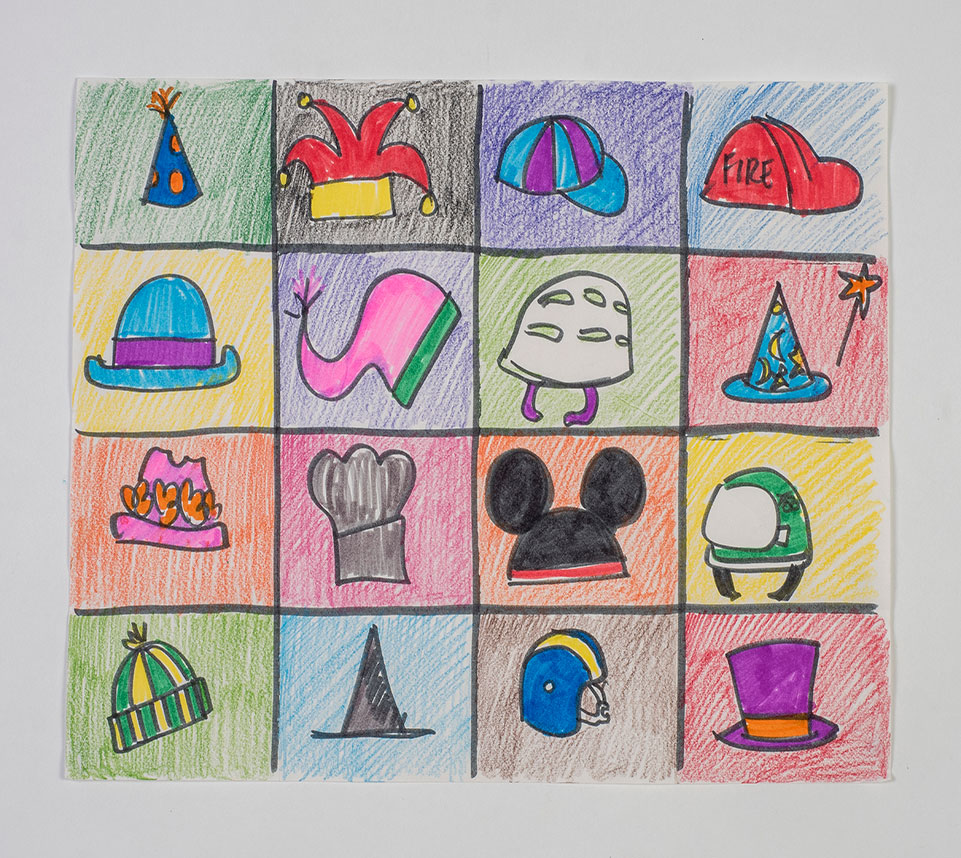
    When older students help younger students it is beneficial for both age groups. Older students ask younger students to brainstorm a list of themes they could use to build a language game. This could be "Hats" (as illustrated in the lesson plan image), "Fruit," "Vehicles," or any other topic. Form small groups with several older and younger students working together to create a game they can play to address the younger students' literacy goals. They could work together over several sessions or the older students could design the game boards and bring them back to the younger students when the games are ready to play. The game boards would be designed by subdividing a piece of heavy paper into as many squares as needed. If they chose "fruit," for example, and came up with 12 different types, the board would have 12 squares. As they draw the images on the game board, they will repeat each of those images on an individual square that will be a piece for the matching game.

  • Step 2

    Arrange a time for the two classes to meet to play the games. Each team will start by playing the game they brainstormed and designed, then they can swap game boards with other teams.

  • Step 3

    To play the game, students will shuffle the cards and place them face down in a pile next to the companion game board. An older student will pick the top card from the pile and describe the object, using richly descriptive language but not naming the item. The younger child will use those language clues to determine which object on the game board sounds like it matches the card. For example, if the card shows an apple the older student might say, "this fruit is smooth and crunchy. It can be red, yellow, or green..." If the younger students gets it right, the card is placed on the "apple" image square. If they guess wrong, the goes back in the deck.

  • Step 4

    The game continues until all the squares are covered. The first team to cover their board can shout "bingo" or another agreed-upon word.

Standards

LA: Add drawings or other visual displays to written text to clarify ideas, thoughts, and feelings.

SEL: Relationship Skills: Communicate clearly/effectively, listen actively, cooperate, work collaboratively to problem solve and negotiate conflict constructively.

Adaptations

Have students play a variation of the game where the younger students draw the images. An older student would pick a card from the deck and describe it without saying the name of the object. The younger children would illustrate what they think it is.

To show the vast number of descriptive words that can be applied to the theme, have the teams work to generate the longest list of adjectives that could describe an item. For example, if apple is used, teams might include adjectives such as these on the list: mushy, sweet, crunchy, dried, juicy, etc.