Skip to Main Content

Ancient Chinese Porcelain

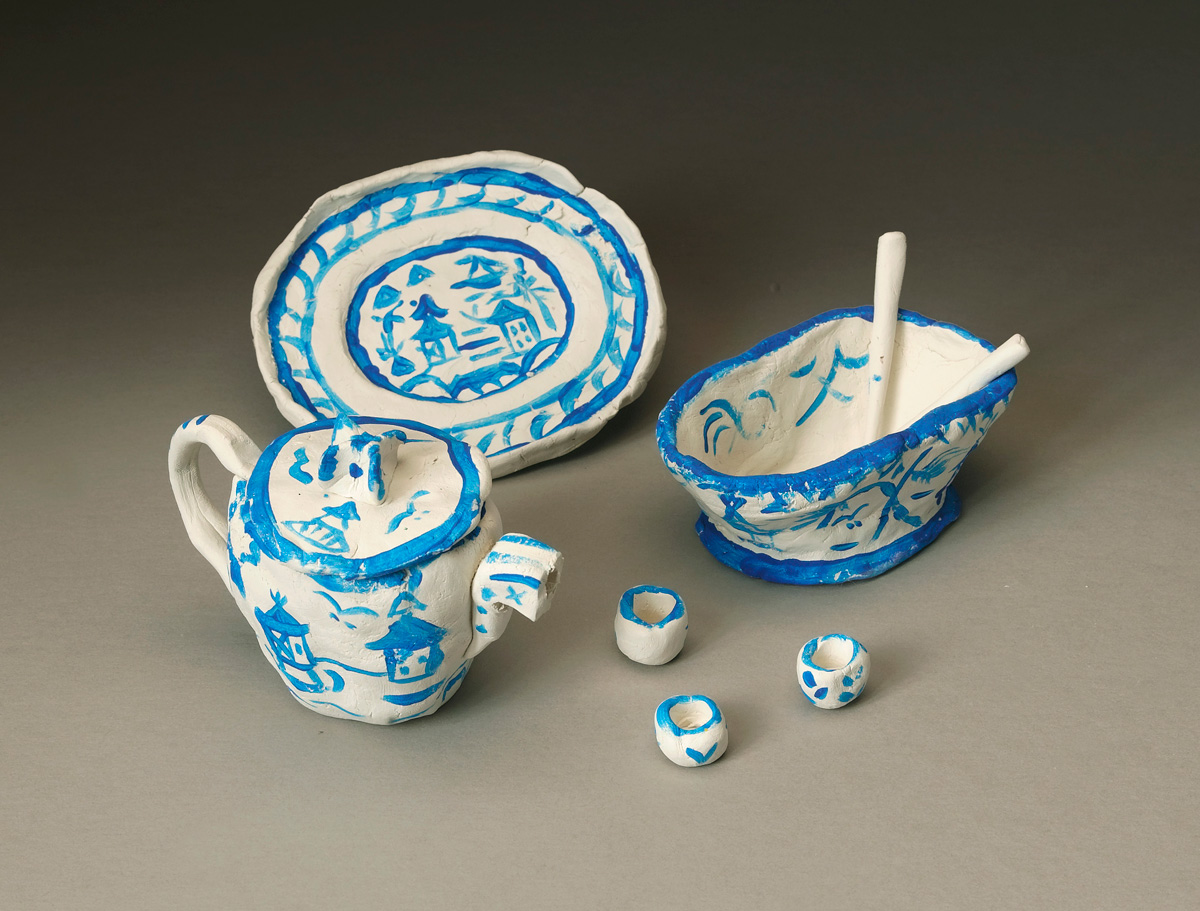
Porcelain was invented in China over 3,000 years ago. Students will explore its history and create porcelain replicas out of Air-Dry Clay.

Lesson Plan

Supplies Needed

Gather all the supplies needed to bring your craft ideas to life! From paints and markers to glue and scissors, our crafts section has everything to spark creativity and make every project truly special.

Steps

  • Step 1

    Porcelain, also called china appropriately enough, originated in China. The process of creating it was a centuries-long development that culminated about 1,200 to 2,000 years ago. Have students investigate its development and history in China as well as its spread to other East Asian countries, then to Europe, and eventually throughout the world. Ask them to learn about the three main categories: hard-paste, soft-paste, and bone china. How is porcelain made? Have students look at images of porcelain from different regions.

  • Step 2

    Have students create porcelain replicas out of Air-Dry Clay. When the clay is dry they can paint their pieces. They might choose a color scheme and pattern associated with traditional Chinese porcelain or of another country.

  • Step 3

    When the pieces are dry, have students present them to the class and explain how they chose the colors and designs on their art.

Standards

ARTS: Relate artistic ideas and works with societal, cultural, and historical context to deepen understanding. 

SS: Culture: Create, learn, share, and adapt to culture. 

Adaptations

Invite a potter to talk to the class about creating porcelain art. They might come in person or present a video demonstration. Have students prepare questions for the speaker in advance of the visit.

Have students explore other art forms that originated in China such as shadow puppetry, kite flying, and instruments such as the bone flute and the guqin, a seven-stringed plucked instrument.