Skip to Main Content

Animals of the Galapagos

Students will learn about some of the species found only on the Galapagos Islands and create art that depicts one of these unique animals.

Lesson Plan

Supplies Needed

Gather all the supplies needed to bring your craft ideas to life! From paints and markers to glue and scissors, our crafts section has everything to spark creativity and make every project truly special.

Steps

  • Step 1

    About 80% of the land birds, 97% of the reptiles and mammals, and 30% of the plants found in the Galapagos Islands are endemic, meaning they are found nowhere else on Earth. Have students research where the islands are located and some of the animals they would see only in the Galapagos. For example there's the Galapagos giant tortoise which can live well over 100 years, the flightless cormorant which is the only cormorant that has lost its ability to fly, and the large painted locust which is the brightest and most colorful insect in the Galapagos. It is a great jumper and can quickly cover 10 feet in distance.

  • Step 2

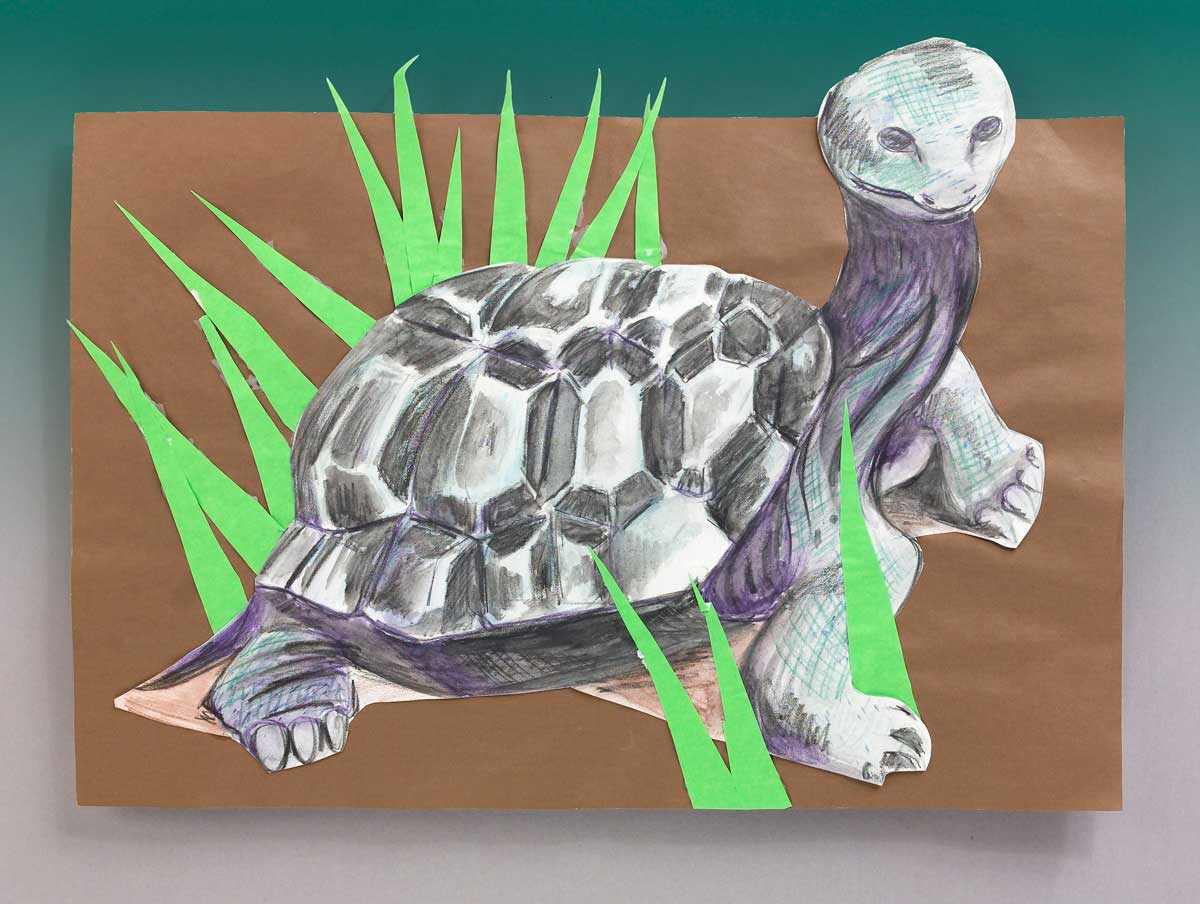
    Ask students to choose a Galapagos animal to study and depict in a drawing. They should look at images of the animal to guide them and learn about their habitat. Have them draw the animal using colored pencils and then cut it out. They can embellish the drawing by drawing and cutting out features associated with its diet or habitat. Have them glue the drawing and extra features to a piece of heavy paper.

  • Step 3

    Ask students to present their drawings to the class and share some of the insights they learned about this animal of the Galapagos.

Standards

SCI: Ask questions about the features of phenomena observed and conclusions drawn from investigations or models.

SCI: Design pictorial or graphic representations/models that are useful in communicating ideas.

Adaptations

The name most associated with the Galapagos Islands is Charles Darwin. While traveling there in the mid 1900s he noticed that unique creatures were similar from island to island, but had adapted to their individual environments, and this formed the basis for his theory of natural selection. Have students research Darwin and how Galapagos finches helped advance our knowledge of evolution.

Have students design a travel brochure that highlights some of the animals you would see there. Ask them to illustrate the animals and write a few facts about them.