Skip to Main Content

Bold & Bright in Harlem

Explore the Harlem Renaissance and create a bright drawing that depicts everyday life in the community.

Lesson Plan

Supplies Needed

Gather all the supplies needed to bring your craft ideas to life! From paints and markers to glue and scissors, our crafts section has everything to spark creativity and make every project truly special.

Steps

  • Step 1

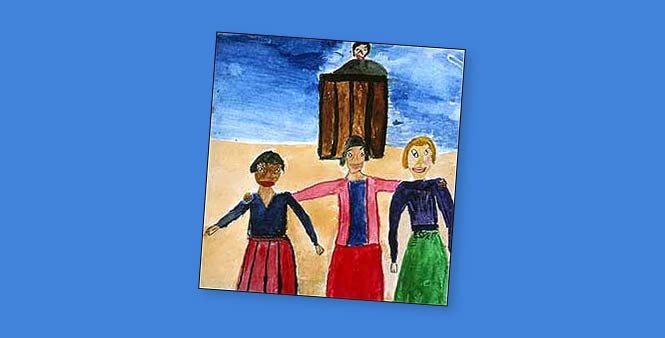
    Discuss the Harlem Renaissance, the intellectual and cultural revival of African-American music, dance, art, fashion, literature, theatre, politics, and scholarship that spanned the 1920s and 1930s in New York City. What are its origins? Who are some notable people of the era? Display images by artist William Henry Johnson, a key figure of the period who aimed to illustrate the richness of African culture during this time period. Talk about his preferred art techniques and how he created an intentional appearance of grittiness to an image.

  • Step 2

    Have students illustrate a Harlem scene depicting everyday activities using bold and bright colors, as Johnson did. They could choose to illustrate a scene as they imagine it in the past from their readings, by exploring images he created, or their own interpretation of present-day Harlem.

  • Step 3

    Ask students to present their art and describe why they decided to depict that scene. Compare and contrast scenes that different students created to see patterns or unique features from various eras.

Standards

ARTS: Relate artistic ideas and works with societal, cultural, and historical context to deepen understanding.

SS: Time, Continuity, and Change: Read, reconstruct, and interpret the past. Imagine the future. Place oneself in various times and spaces and reflect on change.

SS: Individual Development and Identity: Describe factors important to the development of personal identity and the context of identity within families, peer or affinity groups, schools, communities, and nationalities.

Adaptations

Learn about the musical "Shuffle Along" by Eubie Blake (music), Noble Sissle (lyrics), and Flournoy Miller and Aubrey Lyles (book). It was an all-Black production and a landmark in African-American musical theater. Poet Langston Hughes credits it with inspiring the Harlem Renaissance.

Read the Langston Hughes poem "The Negro Speaks of Rivers" which uses a river metaphor to talk about Hughes' life and the broader African-American experience.