Skip to Main Content

Build a Model Planting Box Garden

Design and build a model of a raised bed garden using recycled materials.

Lesson Plan

Supplies Needed

Gather all the supplies needed to bring your craft ideas to life! From paints and markers to glue and scissors, our crafts section has everything to spark creativity and make every project truly special.

  • Recycled Cardboard Box
  • Ruler
  • Tape
  • White Paper

Steps

  • Step 1

    Invite students to share their experiences with gardens and gardening. Has anyone ever planted a raised bed garden, the kind that is in a box above the ground? Look at designs and explore the idea of raised bed gardens in books and on the internet. Discuss the benefits of growing plants this way. Have students look up some plants - decorative or edible - that would grow well in their climate.

  • Step 2

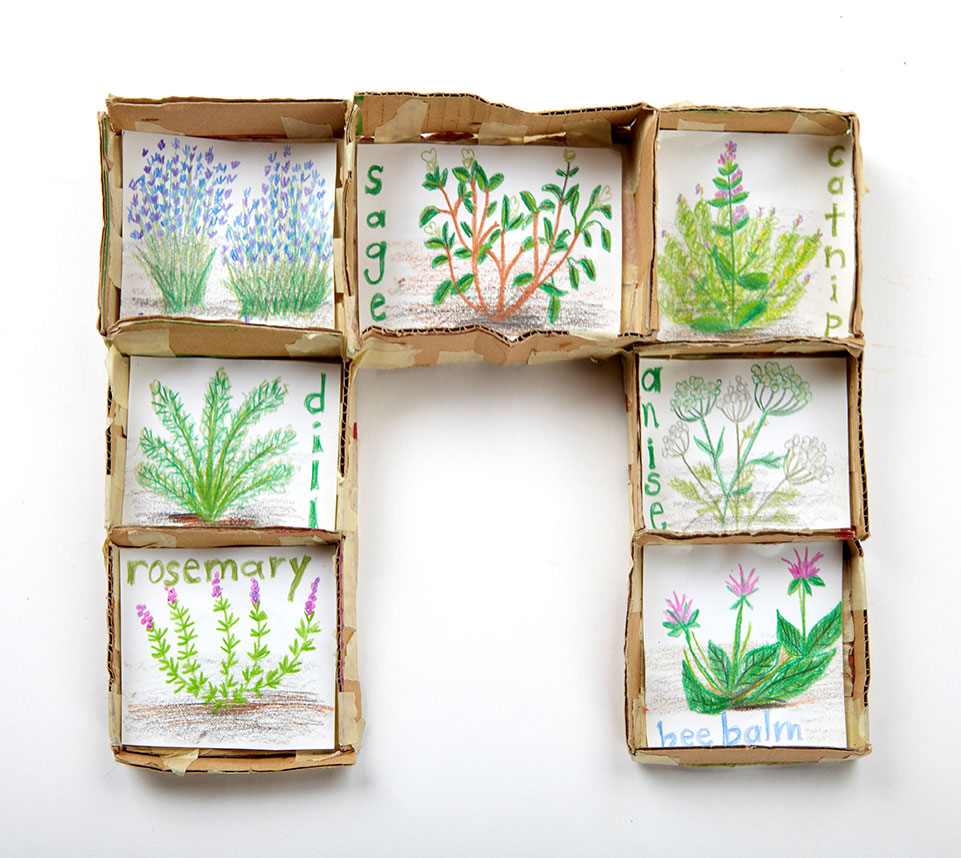
    Talk about scale models, a smaller physical construction built to represent the actual structure. (You might reference the scale model of the Tower of London, which is on display in London.) Ask students to design a raised garden bed. Tell them to use a simple scale, perhaps 1 inch = 1 foot or 10 cm = 1 meter. Have them then cut the materials they'll need from recycled cardboard boxes and assemble their garden bed. They can then draw the plants they'd like to grow and attach them in the appropriate sections.

  • Step 3

    Challenge students to compute the area and volume of their raised beds and each section within it. Ask them to research what kinds of soils and growing conditions they'd need to provide for the plants they illustrated.

Standards

MATH: Analyze, compare, create, and compose math ideas using written, oral, and drawn lines, shapes, forms, and patterns.

MATH: Apply mathematical operations to solve real-world problems.

MATH: Create models that demonstrate match concepts and attend to precision.

SCI: Convey designs through sketches, detailed drawings, or physical models to communicate ideas and solutions.

SCI: Design pictorial or graphic representations/models that are useful in communicating ideas.

Adaptations

Plan and propose a vegetable garden for your school's grounds that can be tended to by students. The produce can then be used in the cafeteria or donated to food pantries.

Research and discuss vertical gardens, such as the Hanging Gardens of Babylon (one of the Seven Wonders of the Ancient World), vertical vineyards in Ancient Greece, and the more modern concept of vertical farming, which can be achieved in a city.