Skip to Main Content

Butterfield's Horses

Artist Deborah Butterfield is renowned for her horse sculptures. Images of her sculptures will inspire students to create their own realistic drawings of these majestic animals.

Lesson Plan

Supplies Needed

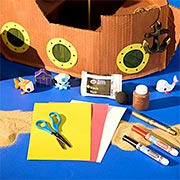
Gather all the supplies needed to bring your craft ideas to life! From paints and markers to glue and scissors, our crafts section has everything to spark creativity and make every project truly special.

Steps

  • Step 1

    Deborah Butterfield is an American artist who uses found objects (mainly scrap metal and wood) to create sculptures of horses. Have students learn about her life and work and look at images of some of her sculptures such as "Rosa," "Wind River," and "Redhead." Ask them to reflect on how and why she looks at horses as a metaphor for herself as well as for Mother Earth. Why did she view her early sculptures as self portraits? How do the found objects used in their construction address the fragility of nature?

  • Step 2

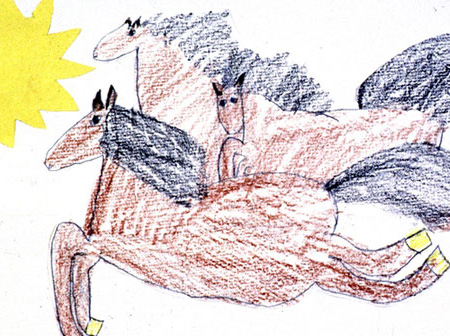
    Having been around horses, both for work and in the sport of dressage, Butterfield depicts them in accurate poses, whether in repose or on the move. Have students use images of horses to guide them as they create a realistic drawing. Encourage them to note the relative imbalance in the size of their legs in proportion to the weight they carry.

  • Step 3

    Have students present their art to the class and discuss some of the insights they learned about Deborah Butterfield and horses.

Standards

ARTS: Speculate about processes an artist uses to create a work of art.

Adaptations

Have students view and investigate Deborah Butterfield's emotionally charged work "Three Sorrows." It includes fragments that washed ashore in Alaska, having found their way across the ocean after the earthquake and tsunami that devastated Japan in 2011.

To construct a 3-D horse sculpture, students build a basic armature for their horse from Crayola Model Magic. Form it in a position natural to a horse. Allow time for it to dry. Collect a variety of recycled materials. Note the shape and size of the collected products. Add moist Model Magic to the dry structure; press the recycled objects into the form in appropriate places. Finish the horse by paying attention to the main forms and eliminating detail.

The history of the horse family (Equidae) began about 56 million years ago. Fossils of Eohippus, the first horse, have been found in North America and Europe. Have students learn about the evolution of horses and their breeding. What breeds are speedy and bred for racing? Which are very strong and used for pulling heavy loads? Where can wild horses be observed in their natural habitats?