Skip to Main Content

Go to Bat for Bats

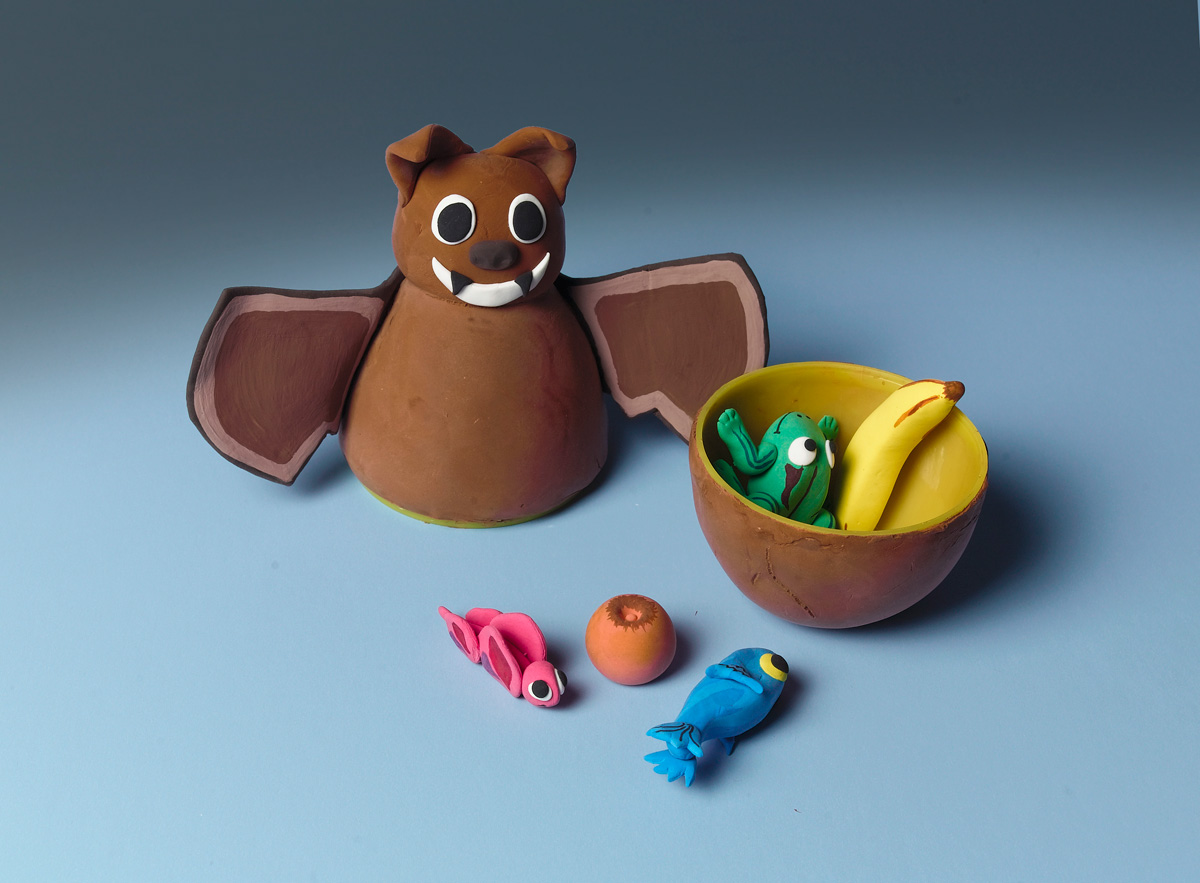
Students will learn fascinating facts about bats and then create figurines of this amazing flying mammal.

Lesson Plan

Supplies Needed

Gather all the supplies needed to bring your craft ideas to life! From paints and markers to glue and scissors, our crafts section has everything to spark creativity and make every project truly special.

Steps

  • Step 1

    The only flying mammal in the world is a bat. Have students learn some facts about this amazing creature. For example, it can live more than 30 years and can fly at speeds of 60 mph or more. Bats can eat up to 1,200 mosquitos an hour and they find their food using echolocation, which is the process of emitting sounds and listening to their echoes to find objects near them. Display an image of a bat and have students notice the interesting features of their wings, which are much shorter than those of a bird. Have them learn how their wings and limbs keep them from falling off their perch when they sleep - upside down!

  • Step 2

    Have students use images of bats to guide them as they create bat figurines out of Model Magic. They can create separate portions of the bat's body and then attach them as they go. Model Magic will stick to itself when it is still soft. Students might also want to craft figurines of some of the foods that bats eat, such as beetles, mice, crickets, and even fruits.

  • Step 3

    Have students present their creations and talk about some of the interesting facts they learned about bats.

Standards

SCI: Convey designs through sketches, detailed drawings, or physical models to communicate ideas and solutions.

SCI: Design pictorial or graphic representations/models that are useful in communicating ideas.

Adaptations

Invite an animal control specialist or zookeeper to meet with the class and share personal experiences and scientific information about bats. Prior to the meeting, students compose questions for the guest. After the visit, students post new learning to a class blog.

Have students form pairs and perform an echolocation activity. Have one student sit down and put on a blindfold. Have the other student move to a part of the room and make a sound such as clapping or snapping their fingers. Ask the blindfolded student to point to where the sound came from. Repeat this from different parts of the room.