Skip to Main Content

In Black

Explore the beautiful black-on-black pottery created by Pueblo artists in New Mexico.

Lesson Plan

Supplies Needed

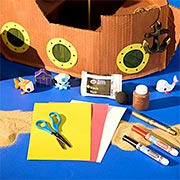
Gather all the supplies needed to bring your craft ideas to life! From paints and markers to glue and scissors, our crafts section has everything to spark creativity and make every project truly special.

Steps

  • Step 1

    The black-on-black ware pottery tradition began in 1910 when San Ildefonso Pueblo artists María Poveka Martinez and her husband Julián were credited with originating a smooth polished black on matte black technique. Introduce students to images of this pottery and have them learn about the region, the artists, and how the technique continues today, having been passed down from matriarch potters.

  • Step 2

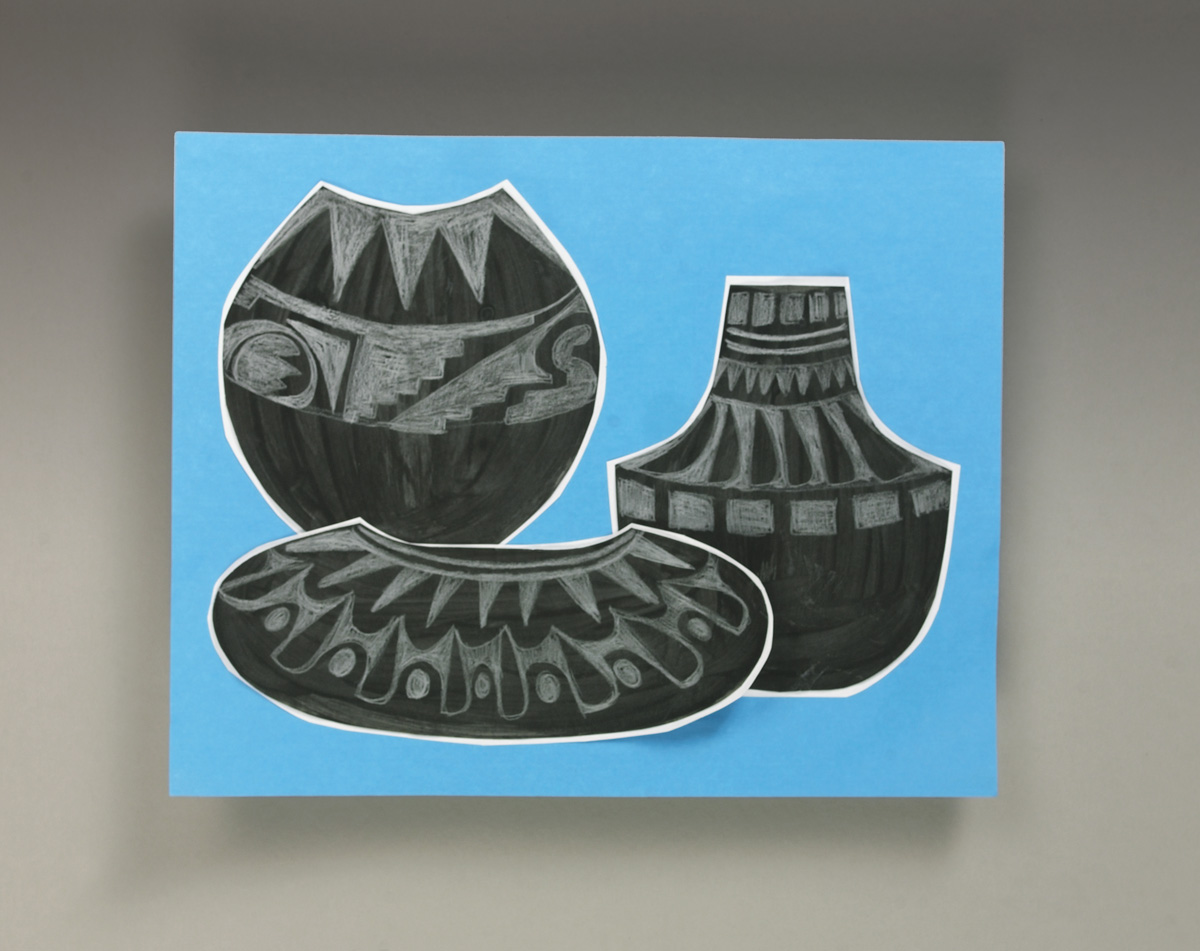
    Ask students to create similar pottery designs on paper. Have them sketch the shape of the vase on black construction paper. Then use a white construction paper crayon to add the classic Puebloan designs to simulate the etched motifs found on black pottery.

  • Step 3

    Students will cut out the pottery designs and mount them on a piece of colored construction paper. Then have them press firmly with the white construction paper crayon to form a bold edge around each piece of pottery.

Standards

ARTS: Relate artistic ideas and works with societal, cultural, and historical context to deepen understanding.

SS: Culture: Create, learn, share, and adapt to culture.

Adaptations

Dive more deeply into Pueblo pottery and learn about some of the symbols featured. For example, flowers and leaves represent a connection to the earth and the circle of life, thin diagonal stripes represent rain or sunbeams and symbolize growth and new beginnings, etc.

Explore ancient pottery. What is the oldest piece ever found? Where was it found? What was it used for?