Skip to Main Content

Neighborly Nations

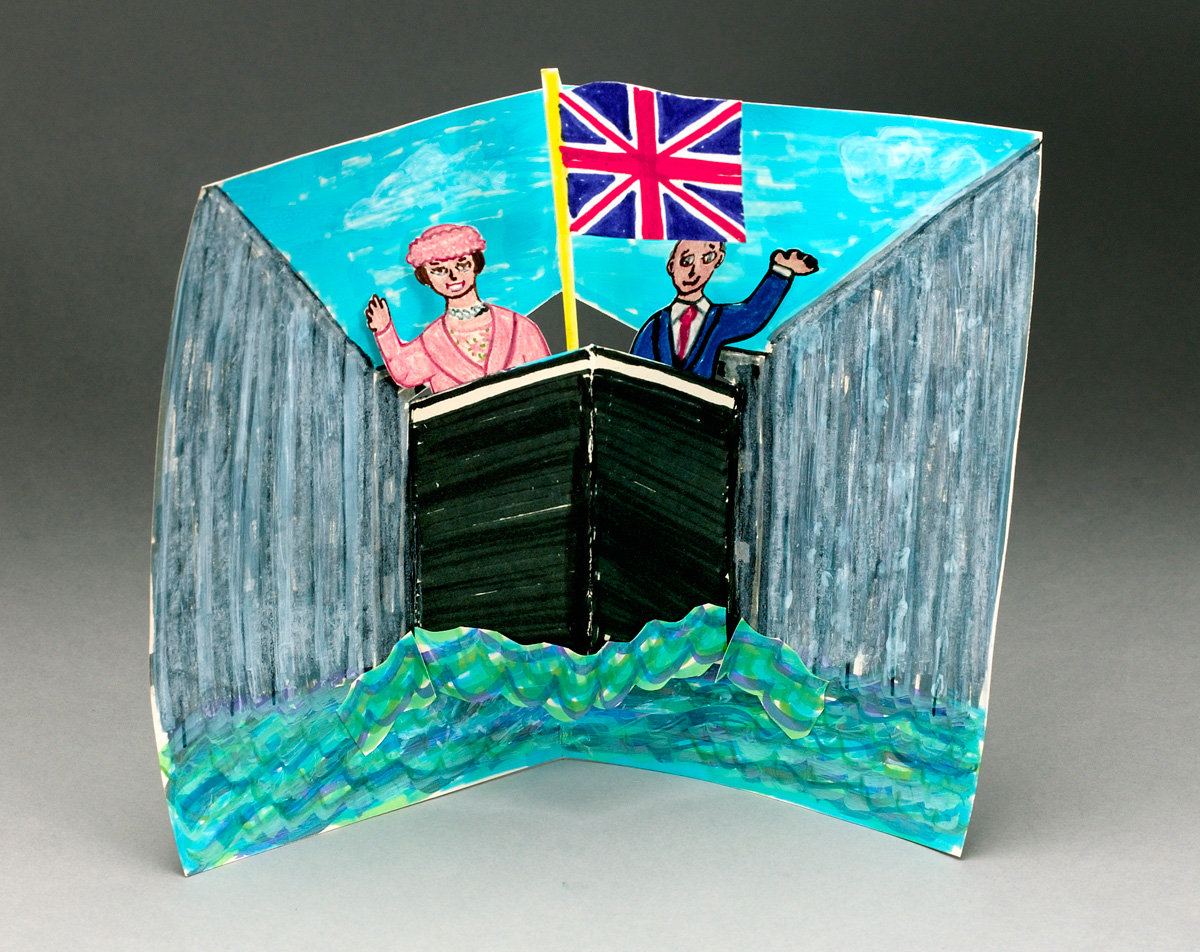
The St. Lawrence Seaway is considered to be an engineering marvel of the 20th century. Students will learn about this partnership between the United States and Canada and create a diorama of President Dwight D. Eisenhower and Queen Elizabeth II during its inauguration.

Lesson Plan

Supplies Needed

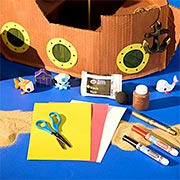
Gather all the supplies needed to bring your craft ideas to life! From paints and markers to glue and scissors, our crafts section has everything to spark creativity and make every project truly special.

  • Heavy Paper
  • Paper
  • Recycled File Folders

Steps

  • Step 1

    Have students investigate the history and uses of the St. Lawrence Seaway, a system of locks, canals, and channels in Canada and the United States that permits oceangoing vessels to travel from the Atlantic Ocean to the Great Lakes and is important for American and Canadian international trade. How was cargo transported before its development? When did its planning begin? What international ports does it serve? Is it also used for recreation?

  • Step 2

    In 1959 U.S. President Dwight D. Eisenhower and England's Queen Elizabeth II inaugurated the 2,300 mile seaway on the Royal Yacht Britannia. Ask students to create a replica of this historic event. To make the 3D image, have them use a recycled file folder to sketch the background and then cut two slits in it where they want the nose of the yacht to pop out. They can create and cut out the people from heavy paper or another file folder. They will now fold forward the front of the yacht and attach the people to the front of that folded section.

  • Step 3

    Have students present their pop-out art and discuss how this partnership benefits the U.S. and Canada and all the countries they trade with.

Standards

SS: Production, Distribution, and Consumption: Consider consequences of individual decisions on groups, communities, the nation, and beyond. 

SS: Science, Technology, and Society: Identify how technologies such as communication and transportation have evolved and how people have employed advances in technology to modify daily lives including health and economics. Explore historical examples and imagine future technologies. 

Adaptations

Have students investigate what life was like in the U.S. and Canada in 1959. What were the fashions? What did it cost to mail a letter or buy a gallon of milk? What movies and songs were popular?

Have students research other trade waterways such as the Panama Canal and the Suez Canal.