Skip to Main Content

Paddle Steamers

Students will explore the history and uses of steamboats, then collaboratively create a replica of one.

Lesson Plan

Supplies Needed

Gather all the supplies needed to bring your craft ideas to life! From paints and markers to glue and scissors, our crafts section has everything to spark creativity and make every project truly special.

  • Chenille Sticks
  • Cotton Balls
  • Craft Materials
  • Craft Sticks
  • Heavy Paper
  • Paper
  • Recycled Cardboard Box
  • Recycled Materials

Steps

  • Step 1

    Have the class learn about paddle steamers, a steamboat powered by a steam engine and paddle wheels. In the early 19th century, paddle wheels were the predominant method of propulsion for steamboats. Ask them to learn about their origin (including Robert Fulton's "Clermont" which was the first commercially successful paddle steamer), where they were mostly used, previous methods of water transportation, and the more efficient methods of propulsion that superseded the paddle steamers in the late 19th century.

  • Step 2

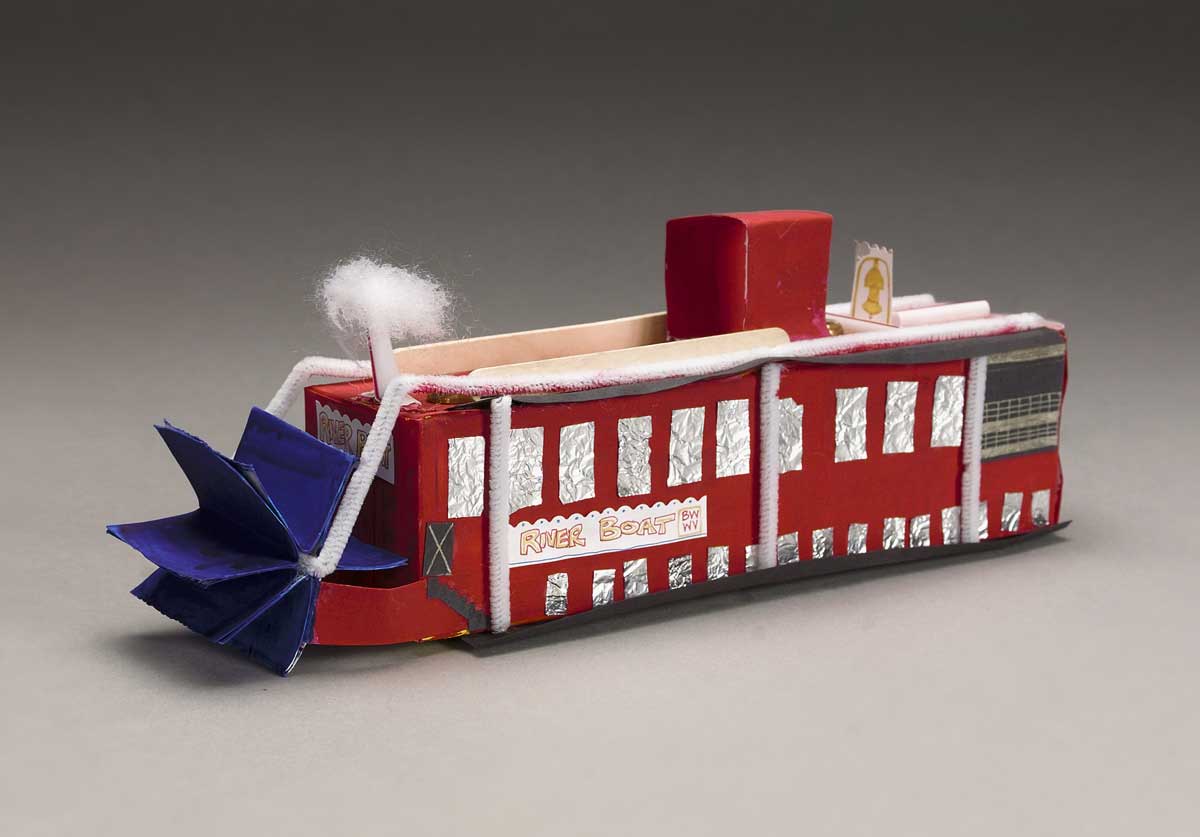
    Have the class divide into groups to collaboratively design and create a paddle steamer replica. Have them look at images of paddle steamers, and ask them to learn about the components of this mode of transportation, such as the paddle wheel, hull, smoke stack, boiler deck, etc.

  • Step 3

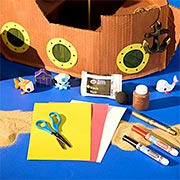
    Using the images they viewed to guide and inspire them, have each team create a replica of a paddle steamer using recycled materials and craft items. A rectangular box or cardboard carton could serve as the base. Components such as the paddle wheel and the smokestack(s) could be made out of heavy paper, and other embellishments might be fashioned out of craft sticks, chenille sticks, aluminum foil, cotton, etc.

  • Step 4

    When their replicas are complete, have each team present their paddle steamer and discuss this historical mode of waterway transportation.

Standards

SS: Science, Technology, and Society: Identify how technologies such as communication and transportation have evolved and how people have employed advances in technology to modify daily lives including health and economics. Explore historical examples and imagine future technologies. 

SS: Science, Technology, and Society: Become aware of how science and technologies influence beliefs, knowledge, and people’s daily lives. 

Adaptations

Robert Fulton (1765-1815) was an American inventor credited with developing the first successful steamboat. He was also known, however, for designing the first practical submarine in history. Have students learn about this vessel. Who commissioned him to design it? When was it built? Where did it first sail? What was it called?

Have students research water wheels, which are machines that convert the kinetic energy of flowing water into forms of power. What are some of their uses? How were they used in ancient civilizations? Are they commonly used today?