Skip to Main Content

Punctuation Matters

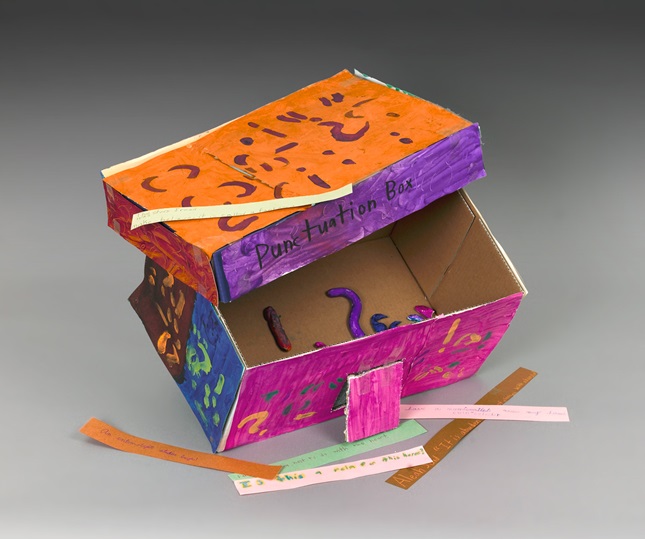
Punctuation adds precision and clarity to writing. Students will learn about and reinforce their understanding of punctuation marks, then create examples out of Model Magic that they can use with sample sentences.

Lesson Plan

Supplies Needed

Gather all the supplies needed to bring your craft ideas to life! From paints and markers to glue and scissors, our crafts section has everything to spark creativity and make every project truly special.

Steps

  • Step 1

    Punctuation ensures that sentences are understood correctly and also contributes to their tone and structural flow. Consider the classic example, A panda eats shoots and leaves. Without commas it describes what a panda eats: shoots and leaves. Adding commas so that it reads, "A panda eats, shoots, and leaves" changes the meaning to a list of three things the panda does. Give students examples of sentences and ask them what punctuation mark should be added. Example might include: How old are you, This is Keeshas book, It was a long cold winter, etc.

  • Step 2

    Have students create punctuation marks out of Model Magic and also write several sample sentences that don't have any punctuation. Then ask them to decorate a recycled box that they will use to store them all in. 

  • Step 3

    Have students take turns reading their unpunctuated sentences on the class. Then ask other students to hold up their Model Magic versions of the punctuation mark needed to clarify the sentence. If several marks are suggested ask those students to repeat the words of the sentence with different tone and punctuation.

  • Step 4

    Later, students can have fun by experimenting with different punctuation in order to change the meaning of a sentence. For example, writing "This is the movie we wanted to see" can change meaning depending on if there's an exclamation point or a question mark at the end.

Standards

LA: Recognize the distinguishing features of a sentence (e.g., first word, capitalization, ending punctuation). 

LA: Demonstrate command of the conventions of standard English capitalization, punctuation, and spelling when writing.

Adaptations

Read a book such as "The Punctuation Station" by Brian P. Cleary and Joanne Lew-Vriethoff or "Punctuation Takes a Vacation" by Robin Pulver and Lynn Rowe Reed. Have students note the importance of punctuation marks in the book.

Have students experiment with conveying punctuation marks using facial expressions or body language. For example, a shrug could indicate a question mark, wide open eyes or a stomp of the foot could indicate an exclamation point, etc.