Skip to Main Content

Raven Tales

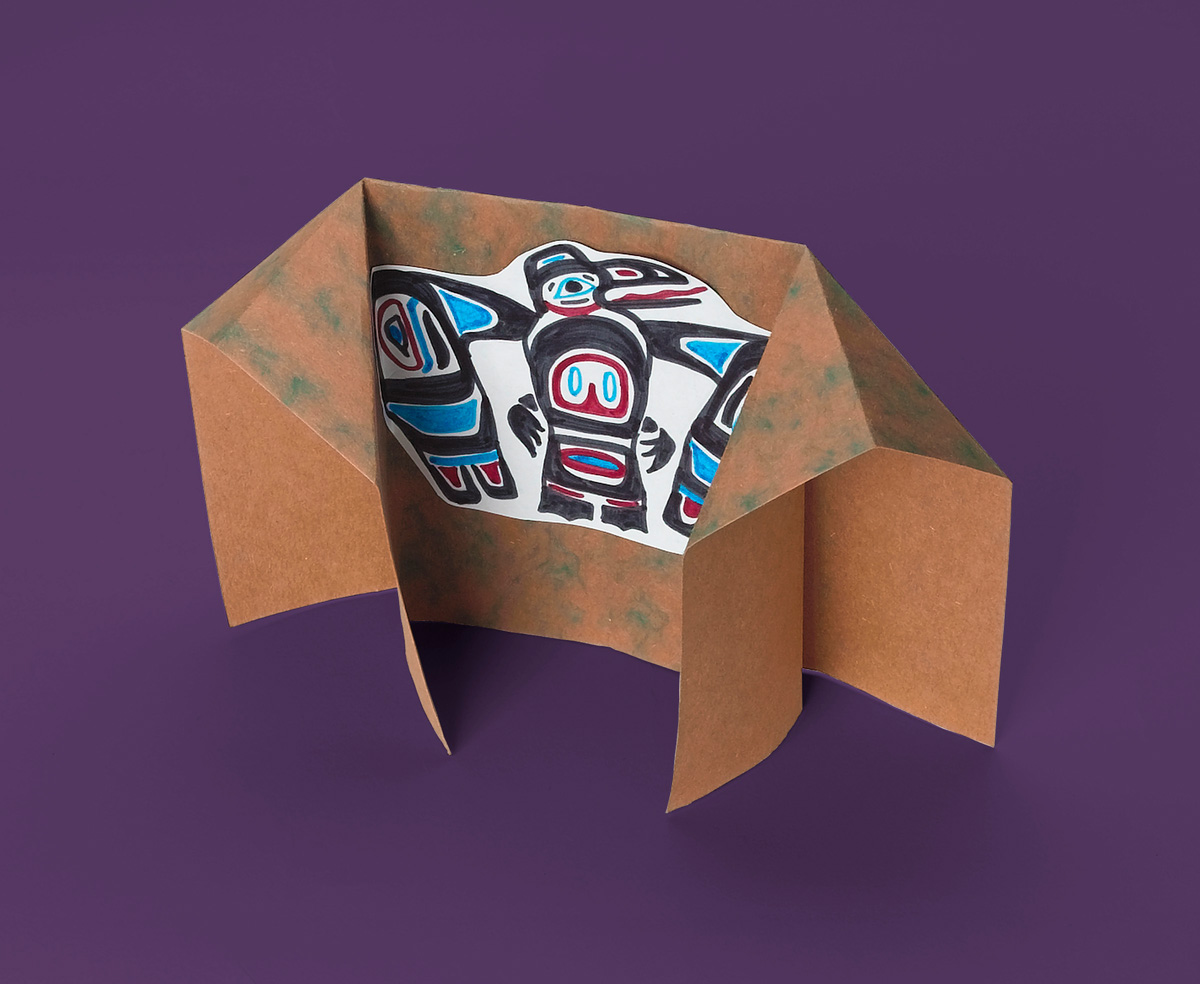
The raven features prominently in First Nations tales. Students will learn about its symbolism and create a raven to display against a backdrop.

Lesson Plan

Supplies Needed

Gather all the supplies needed to bring your craft ideas to life! From paints and markers to glue and scissors, our crafts section has everything to spark creativity and make every project truly special.

Steps

  • Step 1

    Raven tales are the traditional creation stories of the indigenous peoples of the Pacific Northwest and feature prominently in stories of the Haida, Tsimshian, Tlingit, and Tahltan people. Have students investigate the symbolic features of the raven. For example it is a magical creature able to take the form of a human, animal, and even an inanimate object. It also plays various roles such as that of a trickster, messenger, guardian, and creator of the world. Ask them to look at images such as those carved into totems or depicted in First Nations art.

  • Step 2

    Ask students to create a raven image on construction paper, then cut it out. Next have them create a backdrop for their raven by folding a separate piece of construction paper in half so the short ends meet. Fold both open ends into the middle, then unfold. Spread the flaps at each end and crease to form a triangle at the top. Unfold and push the triangle up. Now they can glue the raven image into the backdrop.

  • Step 3

    Ask students to present their raven display and talk about what they depicted. Does their image represent a messenger, a trickster, a guardian, or the creator of the world?

  • Step 5

Standards

SS: Culture: Create, learn, share, and adapt to culture.

SS: Culture: Through experience, observation, and reflection, identify elements of culture as well as similarities and differences among cultural groups across time and place.

Adaptations

Read a book such as "Raven: A Trickster Tale from the Pacific Northwest" by Gerald McDermott. Discuss how myths can help serve as guides about how people should behave towards each other.

Have students explore some First Nations people, a term used to describe Indigenous peoples in Canada who are neither Inuit nor Métis. What are some of the nations? What are their languages and culture? What are some of the traditional artforms?