







An Essential Trait
73% of parents said creativity will be more of an essential trait for their children compared to generations past, due to the rise of artificial intelligence (AI).
You're currently visiting the United States site. Would you like to visit your local site?
Spooky season is here! Discover Halloween fun beyond the candy. Learn More

Inspire imagination and fun for kids of all ages.
Browse All Free Coloring PagesHave a creative moment today with free activity sheets, ideas, and more.
Browse All Ideas & ActivitiesTransform learning with engagement, collaboration, and creativity.
Browse All Learning ContentStay inspired with our latest creative campaigns, get the support you need, and discover the story behind the brand that brings color to life.
Explore Colors



An Essential Trait
73% of parents said creativity will be more of an essential trait for their children compared to generations past, due to the rise of artificial intelligence (AI).
Seventy-three percent of parents said creativity will be more of an essential trait for their children, compared to generations past, due to the rise of artificial intelligence (AI), according to the research.
While parents worry about what skills kids may lose due to AI usage, children themselves are more focused on what technology could unlock and seem to be far more optimistic about the impact of AI.
This generational gap is most evident in how parents and their children view AI’s effects on creativity. According to the study, 35% of parents said they worry that AI will reduce their child’s ability to think creatively, and 30% fear it will compete with them, limiting their opportunities in the workforce.

78% of kids are not worried that AI will reduce their ability to think creatively.
In contrast, only 22% of kids share their parents' concerns about AI hurting their creative thinking abilities, and only 21% fear job competition with AI.
In a digital-first world, kids still crave hands-on creativity
Despite growing up in a digital-first world, the children surveyed expressed a strong desire to engage in hands-on creative experiences.
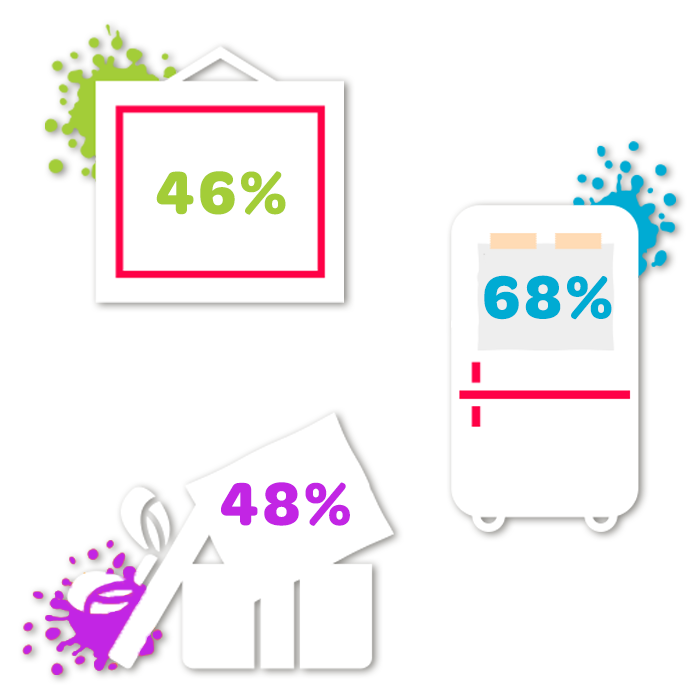
Kids expressed a strong desire to engage in hands-on creative experiences. When they make something by hand versus digitally, they're more likely to retain it.
46% will Preserve it.
68% will Display it at home.
48% will Give it as a gift.
When they make something by hand as opposed to digitally, they’re more likely to preserve it (46%), display it at home (68%) or give it as a gift (48%), turning creativity into something tangible, lasting and meaningful for them.
In the survey, kids were also clear about how adult feedback affects their motivation. Creativity flourishes when adults praise young artists for their effort, ideas and decision-making, rather than judging how “good” the art looks.
And what motivates kids to create? Doing it with parents and families (65%), having their art displayed (45%) and recognizing the amount of work involved (46%).
Surprisingly, according to the data, the least creatively motivating thing parents can do is to tell kids their art looks good (22%) — since even a positive evaluation feels like a test or a judgment, according to the kids.
“When we emphasize effort, process and thinking over outcomes, kids feel safer taking creative risks,” said Cheri Sterman, senior director of education at Crayola. “Research — and kids themselves — are pointing us toward a more supportive way to nurture creativity in the age of AI.”

"Creativity equals success for my child in the future."
85%
of parents believe that in today's world, creativity is essential and no longer just a nice to have.
Why creativity is no longer just important, but essential
Parents recognize creativity as one of the few skills machines can’t easily replicate, with the vast majority of respondents (85%) agreeing: “Creativity equals success for my child in the future.”

parents admitted they wish the adults in their own lives had done more to nurture their creativity when they were children.

How kids want to be supported creatively, according to the data:
Ask for kids' creative ideas and listen to them (52%).
Provide supplies for creating (51%).
Encourage problem-solving (47%).
Spend more time creating (46%).

Research methodology:
Talker Research surveyed U.S. parents of kids aged 8-12 (and their kids) who have access to the internet; the survey was commissioned by Crayola and administered and conducted online by Talker Research between Dec. 19 and Dec. 23, 2025. A link to the questionnaire is available online. View the Questionnaire.
To view the complete methodology as part of AAPOR’s Transparency Initiative, please visit the Talker Research Process and Methodology page.