Skip to Main Content

Lesson Plans

Spark creativity with Crayola lesson plans. With hundreds of activities, the learning possibilities are endless. 

Iceberg Calving

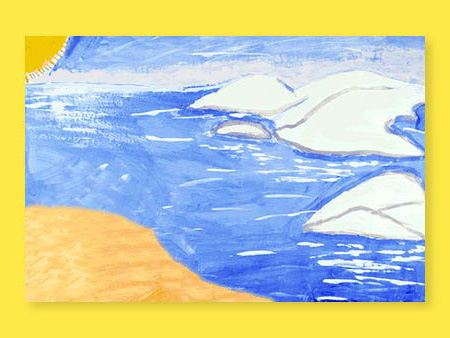
Icebergs are formed when they break off from larger ice masses such as glaciers or ice sheets. Student will learn about this process, called calving, and create a piece of art featuring an ice formation.

Lesson Plan

Supplies Needed

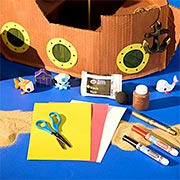
Gather all the supplies needed to bring your craft ideas to life! From paints and markers to glue and scissors, our crafts section has everything to spark creativity and make every project truly special.

Steps

  • Step 1

    The sudden release and breaking away of a mass of ice from a glacier, iceberg, ice shelf, ice front, or crevasse is called calving. The part that breaks away becomes a new iceberg and is categorized according to size from a very small growler measuring less than 3' x 16' to a bergy bit measuring 3'-13' x 15'-46' to a very large berg measuring greater than 240' x 670'. Have students research this process, including the effects of climate change, and other interesting facts about icebergs.

  • Step 2

    Have students look at images of icebergs and glaciers and use these to guide them as they paint an icy scene.

  • Step 3

    Have students present their paintings and discuss some of the interesting facts they learned about these ice masses.

Standards

SCI: Understand that events have causes, sometimes simple and sometimes multifaceted.

SCI: Use evidence to support the concept that behaviors can be influenced by the environment and the environment is impacted by behavior.

Adaptations

Greenland and Antarctica are home to most of the world's glacial ice, including its only two ice sheets, and therefore are of particular interest to scientists who study the effects of climate change. Have students investigate some of the effects of climate change on glacier loss and learn what can be done to halt the process.

Have students visit NASA.gov to watch videos such as the 5-minute NASA Explorers: Glacial Pace or the 7-minute How NASA Decodes the Secrets of the Arctic.